跳到内容

Sourcing spike shoes should be straightforward. But importers who've been burned by a supplier know the real story: one bad batch, one missed season, one "we don't do custom" conversation, and suddenly the cost of staying starts to outweigh the cost of switching. If you're reading this, you've probably already tried to fix the relationship. This article is for the moment after that.
Importers don't switch spike shoe suppliers because they found something cheaper. They switch when a supplier's recurring failures — in quality consistency, delivery reliability, or customization capability — begin costing more than the transition itself. The three most common breaking points are: quality defects met with supplier deflection, delivery slippage that destroys seasonal sell-through windows, and a structural inability to support private-label or custom SKU development.
Understanding why importers reach this decision matters more than simply knowing that they do. Each of the three reasons below follows the same arc — a manageable problem that became unmanageable, not because of the defect itself, but because of what happened next. If any of these narratives sounds familiar, you're probably further along in your decision than you realize.
Reason 1: Quality Failures Are a Trust Event, Not Just a Product Defect
Quality complaints are common in manufacturing. What breaks supplier relationships isn't the complaint — it's the response.
When importers report a defect batch and receive a deflective response ("the products met our standards," "this is within tolerance," "you must have stored them incorrectly"), the supplier has effectively transferred both the financial loss and the relationship risk entirely onto the buyer. Most importers absorb this once. Almost none absorb it twice.
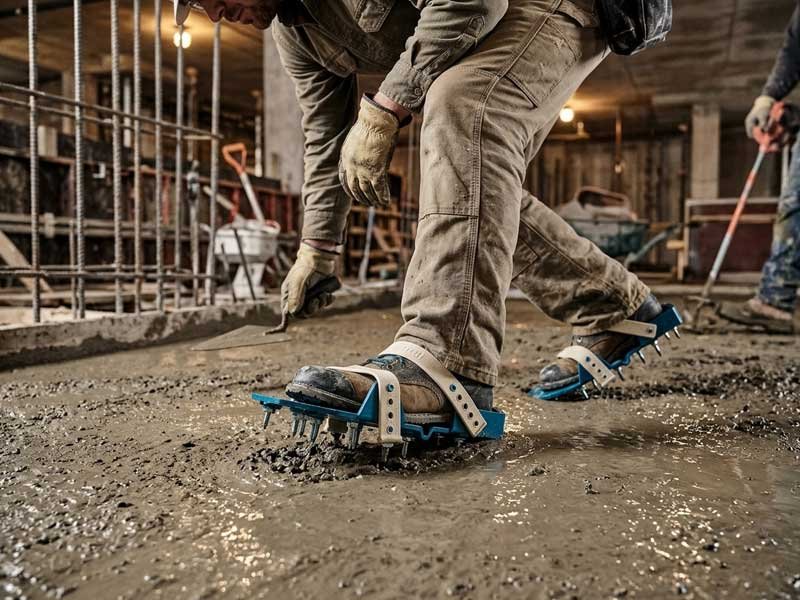
The pattern we hear consistently from importers who come to us after leaving a previous supplier goes something like this: a batch arrives with visible defects — broken straps, uneven spike welds, material brittleness, or inconsistent spike length[^1]. The importer files a documented complaint. The supplier either denies the defect, offers a token partial credit, or promises "better QC next time" without any structural change to how they inspect outgoing product. The importer accepts the resolution because they have a live purchase order to fulfill. But the trust is gone.
Why the Emotional Sequence Matters
The financial loss from a single defect batch is rarely catastrophic on its own. What importers describe to us is something more corrosive: the realization that their supplier will not be a partner in solving problems — only in deflecting responsibility.
This matters for several practical reasons:
- Amazon sellers face direct exposure. A spike shoe listing with a 3.2-star review mentioning "strap broke after two uses" or "spikes bent on first application" is a conversion-killer. The importer eats the return cost, the review stays, and the ranking drops. The supplier feels none of this.
- B2B distributors face downstream liability. A hardware distributor who has bundled spike shoes with epoxy floor coating kits needs those shoes to perform reliably. One bad season of complaints from their contractor customers affects their own brand reputation, not just the product brand.
- Private-label brands carry the defect publicly. When your logo is on the product, your brand absorbs the quality failure. There is no supplier name to blame. The importer is the brand.
What a Better Supplier Relationship Looks Like Here
The difference isn't just "better QC." It's a supplier who treats your defect report as a production feedback signal rather than a liability threat. In our factory, when an importer reports a field defect, we trace it back to batch records, material intake logs, and the specific mold run. We want to know what went wrong because we can't fix what we don't diagnose.
The questions worth asking any prospective supplier:
| Question | What a strong answer looks like |
|---|---|
| How do you handle defect reports? | Clear RMA or credit process, plus root-cause documentation |
| What is your outgoing QC process? | Specific inspection points per SKU, not a general policy statement |
| Can you share a recent corrective action report? | Willingness to share this signals transparency |
| What are your spike weld and strap tensile specs? | Numerical specs, not vague "high quality" language |
A supplier who deflects on any of these questions during a sales conversation will almost certainly deflect on them after a defect batch.
Reason 2: Delivery Slippage Destroys Seasonal Windows — and the Damage Compounds
For spike shoes specifically, timing isn't just important. For many importers, it is the product.
Lawn aerator shoes sell in a compressed spring window.[^2] Epoxy floor spiked shoes track renovation contractor schedules that cluster around Q1 and Q3.[^3] A three-week shipping delay doesn't mean late inventory — it can mean an entire missed season, which for an Amazon seller compounds into ranking loss, lost ad spend efficiency, and stranded inventory carrying costs that extend into the next cycle.
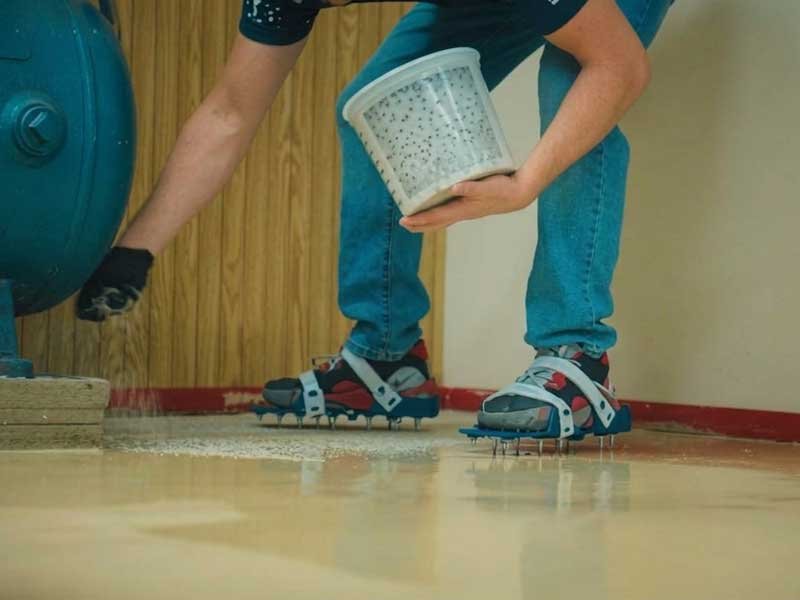
The importers who describe delivery failures to us rarely frame it as "they were a few weeks late." They frame it as "we missed the season." That's an important distinction. A generic product sold year-round absorbs a delayed shipment. A seasonal product with a 10-to-12-week peak window does not.
Breaking Down the Downstream Cost
Let's be specific about what a missed seasonal window actually costs an Amazon seller, without inventing fictional numbers:
- Ranking decay. Amazon's A9 algorithm rewards consistent sales velocity. A product that goes out of stock — or arrives too late to build velocity during peak search demand — can take two to three additional seasons to recover its organic position.[^4]
- Lost ad spend. PPC campaigns set up ahead of a spring lawn care push don't pause themselves. An importer running ads for a product they can't ship is burning budget for zero conversion.
- Stranded inventory. Inventory that misses its sell window becomes a carrying cost problem. For FBA sellers, storage fees accumulate on slow-moving stock[^5]. Liquidating late-season inventory at a markdown erodes the entire margin of that purchase order.
- Missed pre-orders or bundle commitments. B2B distributors who have committed lawn aerator shoe bundles to hardware retail chains face contractual penalties or minimum shortfall penalties[^6] when supply doesn't arrive on schedule.
The Root Cause Is Usually Structural, Not Accidental
From our conversations with importers who've experienced repeated delivery failures, the root cause is rarely a single logistics event. It's more often:
- A supplier running a single production line across too many product categories, meaning spike shoe orders get deprioritized when a higher-volume SKU needs capacity.
- Chronic material procurement delays because the supplier doesn't stock sufficient raw material inventory for predictable order windows.
- Optimistic lead time quoting during the sales process that doesn't reflect actual production queue depth.
What to verify before placing an order with a new spike shoe supplier:
- Ask for confirmed lead times in writing, tied to a production schedule, not just "usually 30–45 days."
- Ask whether your order will share a production run with other buyers, and what the priority policy is if capacity is constrained.
- Request milestone check-ins: production start confirmation, pre-shipment inspection report, and booking confirmation dates — not just a final ship notification.
- Ask about raw material inventory levels for the specific materials in your SKU (PP strapping, EVA base, steel spike stock).
A supplier who can answer all four questions with documentation — not just verbal reassurance — has the operational infrastructure to protect your seasonal window.
Reason 3: "No Customization" Is a Structural Incompatibility, Not a Preference
The third reason importers switch is the one they often minimize when they first describe it. It doesn't feel like a supplier failure. It feels like the importer's own ambition outpacing the relationship.
For private-label importers and e-commerce brands building differentiated SKUs, a spike shoe supplier who only sells standard stock items is categorically the wrong partner — not because they're performing poorly, but because they were never designed for what the importer actually needs. Staying with a stock-only supplier isn't loyalty; it's a structural mismatch that compounds as the importer's brand grows.
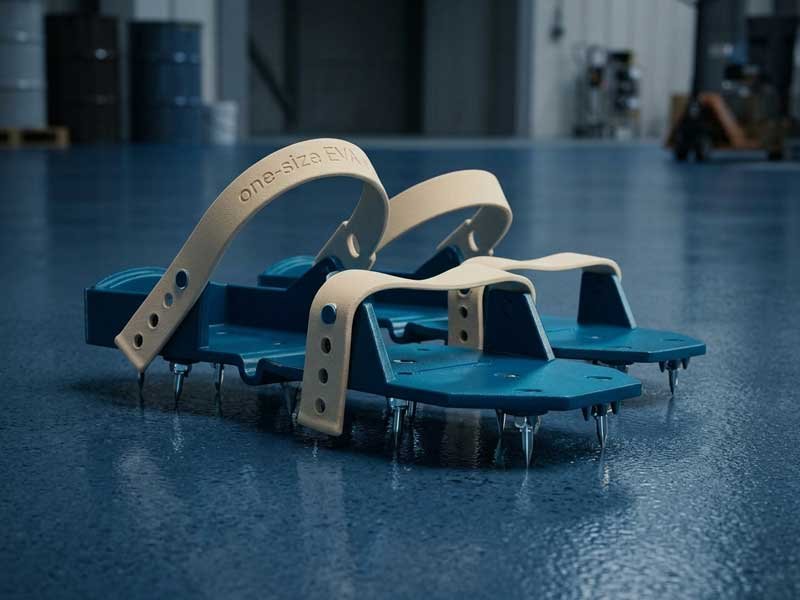
We hear this realization described in a very specific way by importers who come to us after years with a previous supplier: "They were fine when we were just repackaging. But once we wanted our own logo, our own strap color, our own spike length for a specific application — they just couldn't do it."
The supplier didn't fail. The supplier was a stock catalogue business. The importer had become a brand.
What "Customization" Actually Means for Spike Shoe Importers
Customization isn't a single feature. For spike shoe importers, it covers several distinct dimensions:
| Customization Type | Why It Matters |
|---|---|
| Private label branding (logo embossing, woven tags, embroidered straps) | Differentiates the product on Amazon and in retail channels; prevents direct price comparison with identical unbranded stock |
| Spike length and configuration | Different applications require different penetration depth — epoxy floor work vs. self-leveling cement vs. FRP lining vs. lawn aeration are not the same |
| Material selection (PP vs. EVA, chemical resistance grades) | Epoxy solvent environments require chemical-resistant polymers; standard strapping may degrade on contact[^7] |
| Strap configuration and fit range | Commercial contractors need industrial-grade, heavy-duty straps that fit over work boots; consumer lawn care buyers need ergonomic comfort and easy fit |
| Retail packaging design | Amazon-ready packaging, retail hang-tag packaging, and bulk industrial packaging serve different channels with different packaging requirements |
A stock-only supplier can provide none of these. An OEM/ODM manufacturer is designed around all of them.
The Inflection Point That Triggers the Switch
The moment importers describe most often is specific: they've built a product that is selling well, they want to protect it with a branded SKU, and their supplier tells them that custom molds or branded straps require an MOQ they can't meet — or simply aren't offered at all.
This is not a negotiation failure. It's a capability ceiling. Spending another two years trying to negotiate a stock supplier into becoming a custom manufacturer is not a path to resolution. The supplier's business model is built on catalogue volume, not on engineering new tooling for an individual buyer's brand vision.
The strategic question for importers at this point isn't "how do I convince my supplier to do this?" It's "am I already at the scale where a proper OEM partner would work with me?"
In most cases — particularly for importers moving 500+ units per season with a clear SKU roadmap — the answer is yes[^8].
Frequently Asked Questions
How long does it typically take to qualify a new spike shoe supplier?
From first contact to confirmed production-ready samples, a realistic timeline is four to eight weeks for a supplier with existing tooling for your product category. Custom mold development adds six to twelve weeks depending on complexity. Planning your supplier transition outside your peak season window significantly reduces the transition risk.
Should I run parallel suppliers during a transition to protect my inventory?
Many importers do. Running a small test order with a new supplier while maintaining a final order with the existing one is a reasonable hedge. It lets you validate production quality, lead time accuracy, and communication responsiveness before fully committing — without leaving your inventory position exposed.
What documentation should I request before placing a first order with a new supplier?
At minimum: product specification sheets with material grades and dimensional tolerances, an outgoing QC inspection process description, lead time confirmation in writing, and a sample with a signed-off approval record. For branded SKUs, also request a proof of your branding elements before production begins.
Is a lower MOQ always a sign of a less capable supplier?
Not necessarily. A supplier with flexible MOQ policies for new buyers is often signaling that they want to earn long-term volume through demonstrated performance — which is a reasonable business model. The question isn't MOQ in isolation; it's whether the supplier's production infrastructure, material sourcing, and QC processes scale with your order growth.
How do I evaluate whether a spike shoe supplier can actually handle my application's technical requirements?
Ask for material data sheets for the specific polymers used in the strap and base components. For epoxy and chemical-contact applications, ask specifically about resistance to common epoxy solvents and hardeners. For lawn aerator shoes, ask about spike penetration depth per unit weight[^9]. A supplier who can answer in specifics — not generalities — has the technical depth your application requires.
Conclusion
The decision to switch spike shoe suppliers is rarely impulsive. Most importers we speak with have already given their previous supplier multiple opportunities to correct course. The three breaking points that consistently drive the switch — quality failures met with deflection, delivery slippage that destroys seasonal sell-through, and a structural inability to support custom or private-label development — all share the same underlying dynamic: the supplier's business model stopped serving the importer's actual needs.
If you've recognized your situation in any of the three patterns above, the risk of switching isn't whether a better supplier exists. The risk is transition timing and qualification. Both are manageable with the right process.
We've built our manufacturing operation at AeratorShoes.com specifically to serve importers who have outgrown a previous supplier — with dedicated OEM/ODM capability, transparent QC documentation, and production infrastructure designed for seasonal reliability. If you're ready to have a direct conversation, start by telling us what went wrong with your last supplier. That's the most useful thing we can know — and it's the fastest way to show you whether we're actually the right fit.
Reach us directly at chunjiaojohn@gmail.com or WhatsApp: +86 15988980367.
[^1]: "Footwear Defects Classification | Shoe Inspection", https://www.nbnqc.com/defects-in-footwear-products-definitions-and-classification/. ISO 9001 quality management standards and footwear industry inspection protocols recognize dimensional non-conformance and material property failures, including brittleness resulting from improper polymer processing, as standard defect categories subject to corrective action procedures. Evidence role: definition; source type: institution. Supports: That brittleness and dimensional inconsistency are recognized defect categories in polymer and footwear manufacturing quality inspection frameworks. Scope note: General ISO standards apply broadly; spike shoe-specific inspection criteria are not codified in a single publicly available standard
[^2]: "Lawn Management through the Seasons", https://extension.psu.edu/lawn-management-through-the-seasons/. University cooperative extension turf management guidelines consistently identify spring and early fall as the primary aeration windows for cool-season and warm-season grasses respectively, supporting the characterization of lawn aerator product demand as seasonally compressed. Evidence role: general_support; source type: education. Supports: That lawn aeration is a seasonally concentrated activity, primarily in spring and fall, driving corresponding product demand peaks. Scope note: Extension guidelines address agronomic timing rather than retail sales data directly; the inference to sales seasonality is contextual
[^3]: "Monthly Construction Spending, August 2026", https://www.census.gov/construction/c30/current/index.html. U.S. Census Bureau construction spending data and Bureau of Labor Statistics construction employment figures document seasonal variation in contractor activity, providing contextual support for the claim that associated product demand, including protective footwear accessories, follows similar patterns. Evidence role: general_support; source type: government. Supports: That construction and flooring contractor activity follows seasonal patterns that would influence demand for associated protective equipment. Scope note: Government construction data covers broad industry categories and does not isolate epoxy flooring specifically or spiked shoe demand
[^4]: "Amazon's A9 algorithm penalizes keyword stuffing", https://www.facebook.com/groups/1727446317476806/posts/4576287485925994/. Research into Amazon's A9 ranking algorithm indicates that sales velocity is a primary ranking signal, and that inventory gaps disrupt the velocity signals required to maintain organic position; the specific recovery timeline of two to three seasons is an operational estimate not independently verified in published literature. Evidence role: mechanism; source type: research. Supports: That Amazon's search ranking algorithm weights sales velocity and that stockouts negatively affect organic ranking position. Scope note: Most detailed A9 documentation is proprietary; academic and third-party analyses provide mechanism support but not precise recovery timelines
[^5]: "Monthly inventory storage fees", https://sellercentral.amazon.com/help/hub/reference/external/G3EDYEF6KUCFQTNM?locale=en-US. Amazon Seller Central's published FBA fee schedule documents monthly inventory storage fees and aged inventory surcharges applied to units held beyond defined thresholds, confirming that slow-moving or stranded seasonal inventory incurs compounding storage costs. Evidence role: general_support; source type: other. Supports: That Amazon's FBA program charges monthly and long-term storage fees that increase the carrying cost of unsold seasonal inventory. Scope note: Fee structures are subject to change by Amazon; figures cited in any secondary source may not reflect current rates
[^6]: "Efficient Supply Chain Contracting with Loss", https://digitalcommons.newhaven.edu/cgi/viewcontent.cgi?article=1802&context=americanbusinessreview. Supply chain management literature and retail industry analyses document that major retail chains routinely impose vendor compliance programs with chargeback provisions for late deliveries, fill rate shortfalls, and labeling non-conformance, supporting the characterization of contractual financial exposure for distributors who miss committed supply windows. Evidence role: general_support; source type: research. Supports: That retail chain vendor agreements commonly include compliance requirements and financial penalties for delivery failures or shortfalls. Scope note: Specific penalty structures vary by retailer and contract; the claim is supported as a general industry practice rather than a universal contractual standard
[^7]: "Ethylene-vinyl acetate", https://en.wikipedia.org/wiki/Ethylene-vinyl_acetate. Polymer chemical resistance data published by materials manufacturers and referenced in engineering handbooks indicates that polypropylene and EVA exhibit limited resistance to certain organic solvents and amine-based compounds commonly found in epoxy hardener systems, supporting the recommendation for chemical-grade polymer selection in such environments. Evidence role: mechanism; source type: research. Supports: That common footwear strap polymers such as polypropylene and EVA have variable and sometimes poor resistance to epoxy system chemicals including solvents and amine hardeners. Scope note: Resistance varies significantly by specific chemical formulation, concentration, and exposure duration; general resistance charts provide directional rather than application-specific guidance
[^8]: "FSMA Final Rule on FSVP for Imports", https://www.fda.gov/food/food-safety-modernization-act-fsma/fsma-final-rule-foreign-supplier-verification-programs-fsvp-importers-food-humans-and-animals. Trade and sourcing industry analyses of OEM manufacturing in China indicate that minimum order quantities for custom injection-molded polymer products commonly range from 500 to 2,000 units depending on tooling complexity and material costs, contextually supporting the 500-unit threshold cited as an entry point for OEM engagement. Evidence role: general_support; source type: research. Supports: That OEM and ODM manufacturers typically set minimum order quantities for custom development that are accessible to importers at mid-scale volumes. Scope note: MOQ norms vary substantially by product category, factory scale, and negotiation; the 500-unit figure is an approximation rather than an industry-standard threshold
[^9]: "What's the Difference Between Aerator Spikes and Plugs?", https://1stproducts.com/blog/whats-the-difference-between-aerator-spikes-and-plugs/. Turfgrass science literature from university extension programs establishes that effective core or spike aeration requires penetration to a minimum soil depth to relieve compaction, with penetration depth determined by spike geometry and applied downward force, supporting the relevance of spike length and weight-bearing specifications as technical evaluation criteria. Evidence role: mechanism; source type: education. Supports: That spike length and applied force determine effective soil penetration depth in manual aeration, making these specifications relevant to product performance evaluation. Scope note: Extension literature addresses agronomic outcomes rather than product engineering specifications; the direct link to spike shoe design parameters is inferential