跳到内容

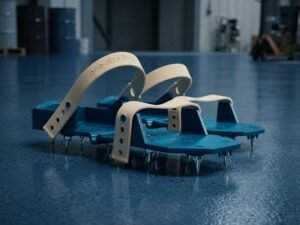
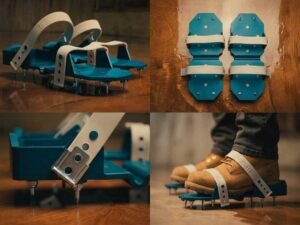
Epoxy spike shoes seem simple on the surface — a spiked sole that lets contractors walk on wet coatings without leaving footprints. But first-time importers who treat epoxy spike shoes as a commodity routinely place bulk orders that generate returns, bad reviews, and lost reorders. The real risk is not finding a cheap price. It is matching the wrong product to the wrong application.
Epoxy spike shoes are not a one-size-fits-all tool. Importers must evaluate spike length, spike count, material construction, and chemical resistance in relation to a specific coating application — whether epoxy, self-leveling cement, polyurethane, or FRP lining. A sourcing decision made only on unit price, without verifying these technical variables, is a sourcing decision made blind.
This guide walks through the decisions experienced importers actually make before committing to a bulk order. If you are importing spiked epoxy shoes for the first time, this is the checklist you need before you open a catalog.
What Are Epoxy Spike Shoes Actually Used For?
Many first-time buyers assume they already know the answer to this question. That assumption is where sourcing errors begin.
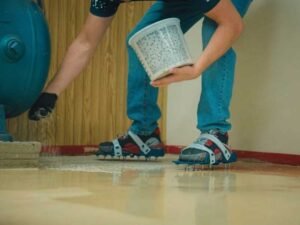
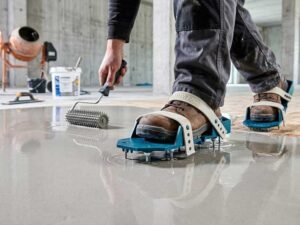
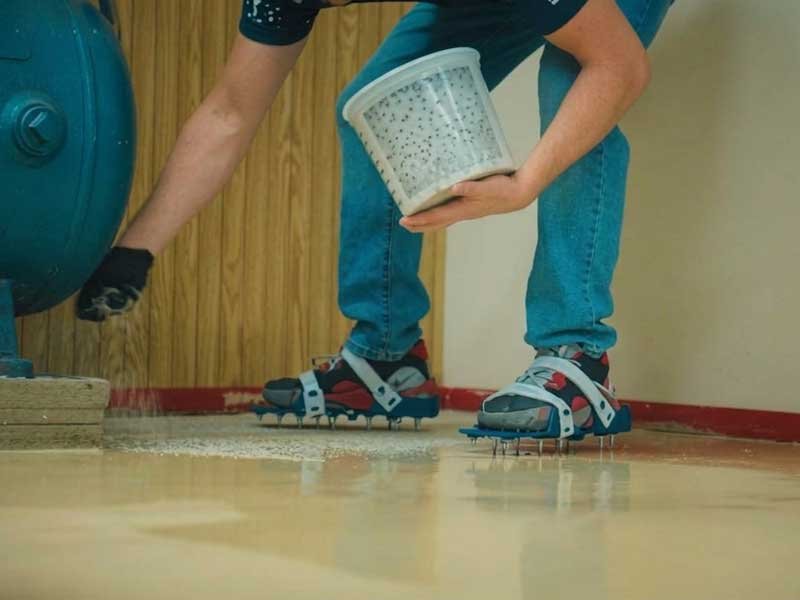
Epoxy spike shoes are worn by flooring contractors to walk across freshly applied coatings without disrupting the surface. The spikes concentrate body weight into small contact points, leaving the coating film intact.[^1] But the type of coating changes every relevant specification of the shoe.
The Four Primary Application Environments
Understanding the coating environment before selecting a product is not optional. It determines which SKU belongs in your catalog and which ones will generate complaints.
1. Standard epoxy floor coatings
These are the most common application. Epoxy floor systems are typically 1–3 mm thick after cure, applied in commercial warehouses, garages, and industrial facilities[^2]. Contractors walk the coating to back-roll, spread, or inspect it while wet. The spike shoe must penetrate the surface cleanly and release without dragging.
2. Self-leveling cement and microcement
Self-leveling compounds are fluid and fast-setting. Contractors have a short working window.[^3] The spike must be fine enough not to leave visible marks, and the contractor needs to move quickly — which means ergonomic comfort and secure footing matter more here than in a heavier industrial setting.
3. Polyurethane (PU) waterproofing membranes
PU waterproofing is common on commercial rooftops and terraces. The coating is applied outdoors, often on sloped surfaces, and is significantly more chemically aggressive than standard epoxy.[^4] Spikes and strap materials used in standard epoxy shoes may degrade in high-solvent PU environments.
4. FRP (fiberglass-reinforced plastic) lining
FRP lining contractors work inside tanks, pipes, and vessel interiors. These are chemically extreme environments.[^5] The spike shoe used here needs documented resistance to the specific resins involved — generic "epoxy-resistant" language on a catalog page is not sufficient.
Key takeaway: If you are building a product listing, describe the specific application it is designed for. "Works for all coatings" is not a sales claim — it is a liability.
| Application | Coating Viscosity | Key Spike Requirement | Chemical Exposure Level |
|---|---|---|---|
| Standard epoxy | Medium | Moderate length (32–40mm) | Low to moderate |
| Self-leveling cement | Very fluid | Fine spike, low footprint | Low |
| PU waterproofing | Medium | Chemical-resistant materials | High |
| FRP lining | Variable | Certified resistance to resins | Very high |
Why Spike Specifications Are the Real Quality Variable?
We are frequently asked by first-time importers for "a good quality epoxy spike shoe at the best price." That question, on its own, cannot be answered usefully — because it skips the variable that actually determines quality.
Spike geometry and material are where low-cost suppliers cut corners first. A shoe with the wrong spike spec will fail in use, regardless of how competitive the unit price looks on an invoice.
Spike Length Determines Coating Compatibility
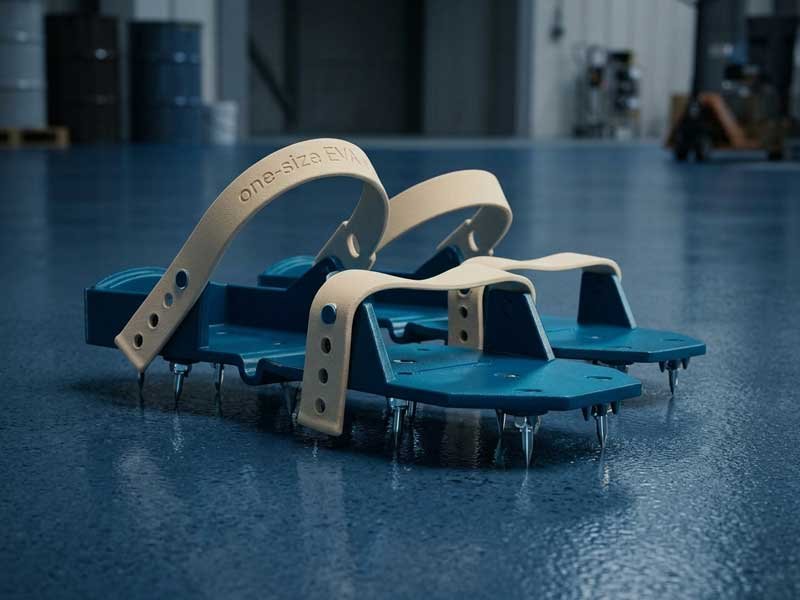
Spike length is not a minor detail. It is the primary performance variable.
- Short spikes (under 30mm): Suited for thin self-leveling coatings. They penetrate just enough to prevent slipping without sinking through a fluid compound. On thick epoxy pours, short spikes do not engage the substrate properly, and the contractor's weight shifts unpredictably.
- Medium spikes (32–40mm): The most commonly sourced length for standard epoxy floor coatings. Sufficient penetration depth on coatings between 1–3mm. This is the sweet spot for most commercial flooring distributors.
- Long spikes (50–60mm): Designed for thick pour applications, including certain waterproofing membranes and multi-layer systems. Importers stocking for roofing or industrial applications should evaluate this range. Using short spikes in these environments is a documented source of contractor complaints we see come back to buyers.
Spike Count and Plate Coverage
Spike count per plate affects weight distribution. More spikes across a wider plate spread the contractor's body weight more evenly — reducing individual spike impression depth and protecting delicate surface finishes[^6].
A common first order we see involves buyers selecting a low spike count plate to reduce material cost. On a smooth self-leveling floor finish, those fewer spikes concentrate more pressure per spike and leave deeper marks. The contractor complains. The buyer gets returns.
Standard evaluation benchmarks we recommend buyers ask their supplier to confirm:
- Total spike count per pair of plates
- Plate surface area (cm²)
- Individual spike tip diameter
- Spike steel grade or material spec (not just "steel")
Spike Material: Where Undisclosed Substitutions Happen
Carbon steel spikes are the standard. But grade matters.[^7] Importers should ask specifically:
- Is the spike heat-treated or raw?
- What is the tensile strength rating?
- Is the spike galvanized, coated, or bare?
In our experience, the spike is the first place a price-compressed supplier substitutes a lower-grade input without changing the product photo or description[^8]. A bare, low-grade steel spike in a solvent-heavy FRP environment will corrode and weaken. The failure does not show up until the product is in the field.
PP Strap-Type vs. EVA One-Piece: Which Construction Fits Your Market?
Importers often ask us to compare these two constructions after they have already been confused by inconsistent supplier descriptions. Here is a straightforward breakdown — but only after the application context is established, because the right answer depends on who is buying and in what environment.
What Each Construction Is Designed For
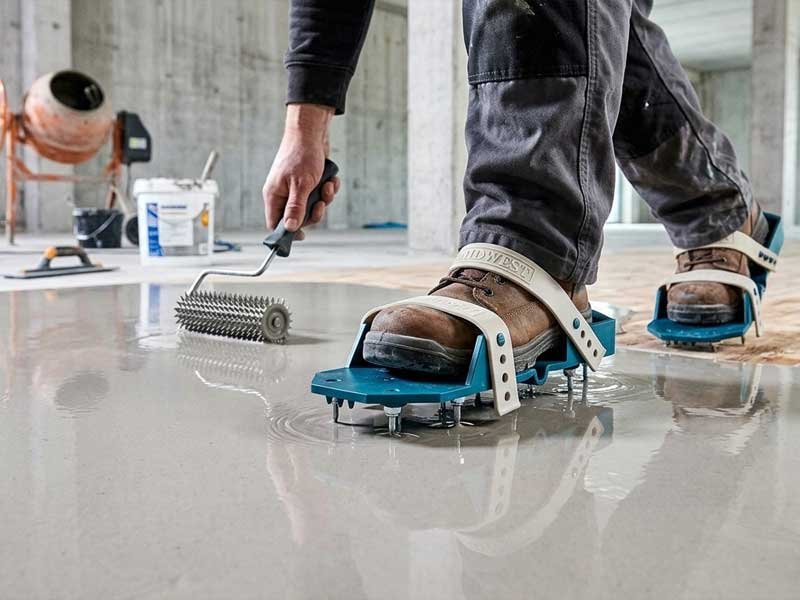
PP Strap-Type (Polypropylene)
This design uses heavy-duty straps that attach the spiked plate to a standard work boot. The strap is the load-bearing element, and the PP material resists most industrial chemicals well.
This construction is better matched to:
- Heavier industrial jobsites where durability in harsh chemical environments outweighs comfort
- FRP and PU waterproofing applications with high solvent exposure
- Contractors who wear their own work boots and need a universal fit over standard footwear
- Markets where a lower per-unit cost is commercially important at the buyer level
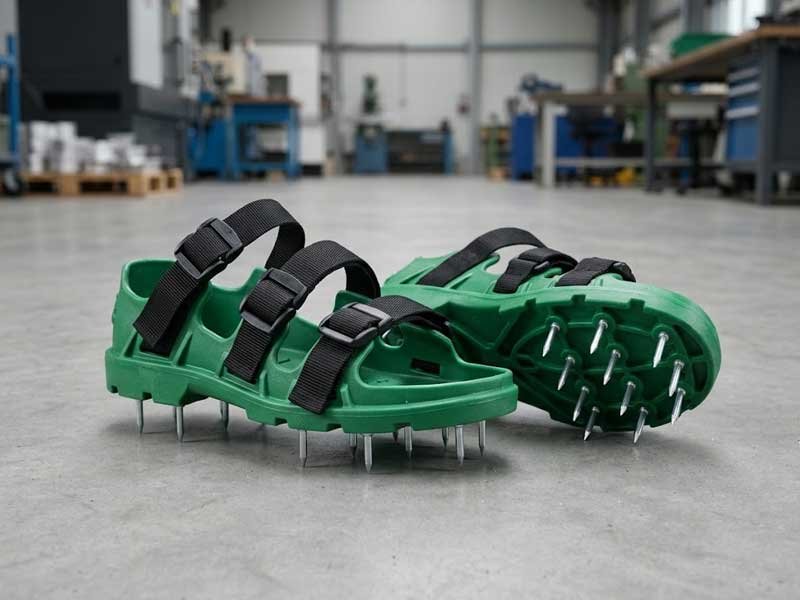
EVA One-Piece Integrated
This is a slip-on shoe with the spike plate integrated into a single molded EVA body. No straps. The contractor puts it on like a shoe over their regular boot.
This construction is better matched to:
- Long-shift indoor commercial flooring work where ergonomic fatigue is a real issue
- Self-leveling and microcement applications where surface sensitivity is high
- E-commerce markets and private-label sellers targeting professional-grade end users
- End users who prioritize a clean, premium product aesthetic
Common sourcing mistake: Importers building a single Amazon listing sometimes choose the PP strap type because the unit cost is lower. If their target buyer is an indoor residential contractor doing high-end microcement floors, the ergonomic mismatch generates one-star reviews that no price advantage can recover from.
Side-by-Side Comparison
| Feature | PP Strap-Type | EVA One-Piece |
|---|---|---|
| Primary material | Polypropylene (PP) | Ethylene-vinyl acetate (EVA) |
| Boot compatibility | Fits over most work boots | Slip-on, integrated fit |
| Chemical resistance | High | Moderate to high |
| Ergonomic comfort | Functional | Superior |
| Best application | Industrial, FRP, PU | Indoor epoxy, self-leveling |
| Typical buyer market | Hardware distributors, contractors | E-commerce, private-label |
How Should First-Time Importers Evaluate a Supplier?
This is where the gap between experienced buyers and first-time importers is most visible. Experienced buyers arrive with a specification sheet. First-time importers arrive with a budget.
We are not suggesting that price is irrelevant. We are saying that price comparison only makes sense after the technical baseline is fixed. Comparing prices across suppliers who have not confirmed the same spike spec, material grade, and construction standard is not price comparison — it is a lottery.
The Technical Questions Every Importer Should Ask
Use this checklist before requesting a price quote. Send it to every supplier you are evaluating. Suppliers who cannot or will not answer these questions in writing are signaling something important.
Spike specification questions:
- What is the spike length (mm) for each SKU?
- What is the spike count per plate?
- What steel grade is used for the spikes?
- Are the spikes heat-treated? What is the rated tensile strength?
- Are the spikes replaceable or fixed to the plate?
Material and construction questions:
- Is the strap material PP, TPU, nylon, or other? What chemical resistance rating applies?
- What is the EVA density rating for one-piece models?
- What plate material is used, and what is the rated load capacity?
Application and testing questions:
- What coating applications has this product been tested for, or what coating environments has it been used in?
- Does the supplier have chemical resistance documentation for the strap or body material?
- Are there any third-party test reports available, and for which standards?
Quality and production questions:
- What in-house QC steps are applied to spike attachment integrity?
- What is the production reject rate for strap components?
- Can the supplier provide a pre-shipment sample for your own evaluation?
What a Good Supplier Response Looks Like
A strong supplier will answer spike spec questions with numbers, not marketing language. They will offer a data sheet, not a catalog PDF. They will acknowledge that different applications require different SKUs rather than claiming their product works for all environments.
In our experience, the quality of the answer to your specification checklist is a better predictor of order reliability than any factory audit checklist.
Frequently Asked Questions
Can one SKU of epoxy spike shoes cover all coating applications?
In most cases, no. Spike length, spike count, and material chemical resistance need to match the specific coating environment — whether epoxy, self-leveling, polyurethane, or FRP. Importers who launch a single undifferentiated SKU will encounter niche complaints they cannot diagnose without understanding which application generated the return.
What spike length is most appropriate for standard commercial epoxy floors?
For standard commercial epoxy floor coatings between 1–3mm thick, spike lengths in the 32–40mm range are the most commonly specified.[^9] Shorter spikes may not engage the substrate reliably on thicker pours, while longer spikes are better suited for waterproofing membranes and multi-layer systems.
How do I verify spike steel quality from a supplier?
Ask the supplier directly for the steel grade specification, heat treatment status, and any tensile strength data. Request a written response, not just a verbal confirmation. If the supplier cannot provide this in writing, treat that as a sourcing risk. For high-exposure applications like FRP lining, request third-party material test documentation and have samples independently evaluated.
Is the PP strap-type or EVA one-piece construction better for Amazon private-label selling?
The EVA one-piece is generally better matched to e-commerce private-label markets where end users are indoor flooring contractors or prosumers who prioritize ergonomics and a clean aesthetic. The PP strap-type is better suited to industrial distribution channels. The "better" option depends entirely on your target buyer and the application they are working in.
What is the most common sourcing mistake first-time importers make?
The most common mistake is requesting a price quote before confirming spike specifications. Without a fixed technical baseline — spike length, spike count, steel grade, material type — price comparisons across suppliers are meaningless. Two shoes priced differently may have entirely different spike specs, and the cheaper one may be cheaper precisely because it cannot perform in the application your end user needs it for.
Conclusion
Epoxy spike shoes are a deceptively technical product. First-time importers who treat them as a commodity — comparing photos and FOB prices without specifying application environment, spike geometry, or material grade — are accepting sourcing risk that will surface in returns, bad reviews, and failed reorders.
The fundamental discipline for any new importer is this: define the coating application first, then derive the product specification from that application, then compare suppliers against that fixed specification. That sequence protects your sourcing decision regardless of which manufacturer you choose.
If you are building a product line around epoxy spike shoes — whether for hardware distribution, private-label e-commerce, or industrial supply — we are happy to walk through the specification variables for your specific market. Contact us at chunjiaojohn@gmail.com or reach us on WhatsApp at +86 15988980367 to start with a technical conversation, not a catalog.
[^1]: "Modeling of Fatigue Wear of Viscoelastic Coatings - PMC", https://pmc.ncbi.nlm.nih.gov/articles/PMC8585156/. The working principle of spiked applicator shoes relies on the viscoelastic behavior of uncured coating films: a narrow spike tip penetrates vertically with minimal lateral displacement of the coating, whereas a flat sole would generate shear forces across the film surface, causing smearing or deformation of the wet layer. Evidence role: mechanism; source type: research. Supports: The mechanical principle by which concentrated point loads from spikes allow walking on wet coating films without causing lateral surface disruption. Scope note: Peer-reviewed studies specifically examining spike shoe mechanics on epoxy coatings are not widely available in the open literature; the mechanism is inferred from general principles of viscoelastic material behavior under point versus distributed loading.
[^2]: "How Thick Is Epoxy Flooring & Why Does It Matter?", https://armorgarage.com/blog/how-thick-is-epoxy-flooring-why-does-it-matter/?srsltid=AU7gw4VQUjwjVeBOmZAxhHbAUFQUFsuUXTo3kECicovBjob5Fi5g8evi. Industry technical guidance from flooring standards bodies such as ASTM or the Concrete Polishing Association of America documents typical epoxy floor coating thicknesses and their standard application environments in commercial and industrial settings. Evidence role: general_support; source type: institution. Supports: Typical dry film thickness ranges for commercial epoxy floor coatings and their common application environments. Scope note: Published standards may specify minimum rather than typical thickness ranges; actual installed thickness varies by formulation and contractor practice.
[^3]: "Testing of Selected Self-Leveling Compounds for Floors", https://nvlpubs.nist.gov/nistpubs/Legacy/IR/nistir5633.pdf. Technical literature on self-leveling cementitious underlayments describes their low viscosity at application and short open times, typically ranging from 15 to 30 minutes depending on formulation, which constrains contractor movement on the wet surface. Evidence role: mechanism; source type: research. Supports: The fluid rheology and limited open/working time of self-leveling cementitious compounds. Scope note: Working time varies significantly by product formulation, ambient temperature, and humidity; the claim of a universally 'short' window is a generalization.
[^4]: "Waterproofing", https://www.kryptonchemical.com/en/products/waterproofing/. Studies on coating chemistry indicate that solvent-borne polyurethane waterproofing systems typically contain higher concentrations of isocyanate-reactive solvents and aromatic compounds than standard water-based or low-solvent epoxy floor coatings, contributing to greater material compatibility concerns for accessory equipment. Evidence role: mechanism; source type: research. Supports: The higher solvent content or chemical aggressiveness of polyurethane waterproofing formulations relative to standard epoxy floor coatings. Scope note: Chemical aggressiveness depends heavily on whether the PU system is solvent-borne, water-borne, or moisture-cured; the claim does not distinguish between these formulation types.
[^5]: "combined exposure to styrene, fiberglass, and silica", https://pubmed.ncbi.nlm.nih.gov/7655959/. NACE International (now AMPP) and ASTM standards for FRP tank and vessel linings document the aggressive chemical exposure conditions encountered during application and service, including contact with styrene, epoxy resins, and catalysts in confined spaces. Evidence role: general_support; source type: institution. Supports: The chemically demanding nature of FRP lining environments in industrial tanks and vessels. Scope note: The specific chemical exposure profile varies by the resin system used (polyester, vinyl ester, epoxy) and the substance the vessel is designed to contain.
[^6]: "Contact Pressure Distribution Optimization", https://vtechworks.lib.vt.edu/bitstream/handle/10919/71645/Hric_GR_T_2016.pdf. Basic engineering mechanics establishes that contact pressure (force per unit area) decreases as the number of load-bearing contact points increases for a fixed applied load, a principle directly applicable to the distribution of body weight across spike arrays on a coated surface. Evidence role: mechanism; source type: education. Supports: The mechanical principle that distributing a fixed load over more contact points reduces pressure per contact point. Scope note: The relationship between reduced contact pressure and reduced impression depth in a viscoelastic coating film also depends on coating rheology and cure state, which are not addressed by the mechanical principle alone.
[^7]: "Carbon steel", https://en.wikipedia.org/wiki/Carbon_steel. ASTM International standards for carbon steel (e.g., ASTM A108, A29) define grade classifications based on carbon content and mechanical properties including tensile strength, and establish that heat treatment processes such as quenching and tempering materially alter the mechanical performance of steel components. Evidence role: definition; source type: government. Supports: The classification of carbon steel grades and the relationship between heat treatment and tensile strength. Scope note: These standards apply to steel stock and may not directly specify requirements for small spike components; application to spike shoes is inferential.
[^8]: "Reducing the Costs of Poor Quality: A Manufacturing Case ...", https://scholarworks.waldenu.edu/cgi/viewcontent.cgi?article=6608&context=dissertations. Research on supply chain quality management documents that cost-reduction pressures in low-margin manufacturing contexts are associated with unauthorized material substitutions, particularly in components that are not directly visible or easily tested by buyers at the point of inspection. Evidence role: general_support; source type: research. Supports: The documented tendency for cost-pressured suppliers to substitute lower-grade materials in manufactured components. Scope note: Published research on this phenomenon tends to focus on high-stakes industries such as aerospace or pharmaceuticals; direct empirical evidence specific to flooring tool accessories is not available in the academic literature.
[^9]: "Spiked Shoes for Epoxy Floors", https://www.questmarkflooring.com/spiked-shoe.html. Product technical sheets and contractor guidance published by flooring industry associations reference spike lengths in the 30–40mm range as appropriate for standard epoxy floor coating applications, with the specific value selected based on coating thickness and viscosity at the time of application. Evidence role: general_support; source type: institution. Supports: The 32–40mm spike length range as a commonly used specification for standard commercial epoxy floor coating applications. Scope note: The 32–40mm range cited in the article appears to reflect common commercial practice rather than a formally standardized specification; no single authoritative standard body appears to have codified this range for epoxy floor coating applications.