跳到内容

Choosing the wrong spike material for your private-label product line is a quiet revenue killer. Aluminum vs. galvanized spikes seems like a straightforward spec decision — until field returns start arriving and your reorder rate stalls. The good news: this decision becomes predictable once you route it through the right questions.
The honest answer is that neither aluminum nor galvanized spikes sells better universally — the right material is determined by the buyer's end-use environment. Epoxy flooring, FRP lining, and chemical-exposure applications consistently reorder aluminum. Outdoor landscaping and general hardware distribution consistently favor galvanized. Matching spike material to buyer channel is the single most reliable way to reduce returns and protect downstream brand trust.
That routing logic sounds simple. But in practice, most OEM buyers come to us with the question already half-answered in their heads — and the wrong half. The sections below break down exactly what drives each material's performance, what we observe from buyers who come back for reorders versus those who escalate complaints, and how to make this call cleanly for your next SKU.
Does Spike Material Actually Affect Product Returns?
Most private-label buyers treat spike material as a cost variable. It is actually a channel-fit variable — and the two are not the same thing.
When spike material is mismatched to its application environment, performance degradation is not theoretical. It shows up as surface discoloration, premature corrosion, structural weakening, or — most damaging for branded product lines — customer complaints that are hard to reproduce in a quality audit but impossible to dismiss in a review section.
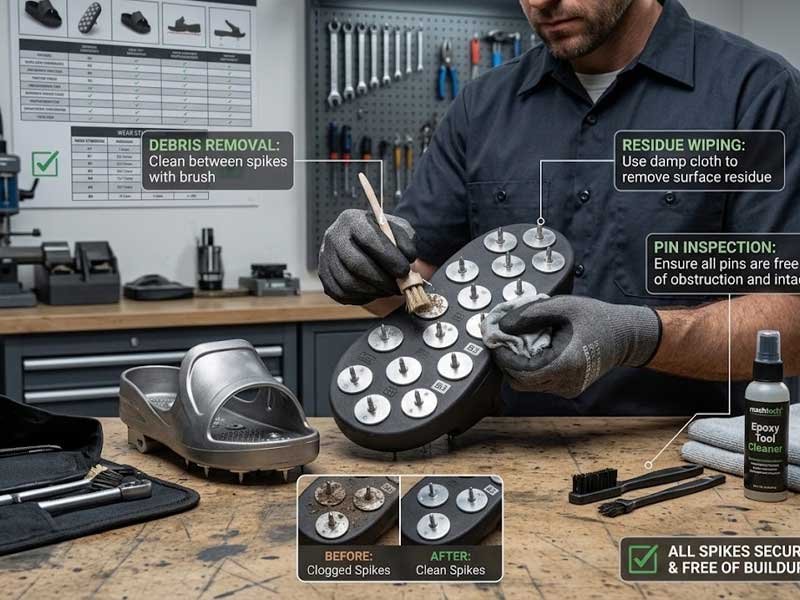
The question we ask every OEM buyer before quoting spike material is straightforward: What surface will these spikes contact, and what chemicals are present in that environment? That single question separates flooring-channel buyers from landscaping-channel buyers faster than any spec sheet comparison.
Why the Application Environment Overrides Everything Else
Here is what we observe consistently across buyer inquiries:
- Epoxy resin, polyurethane, and self-leveling cement are chemically aggressive toward zinc coatings. Galvanized spikes in sustained contact with these systems show surface degradation faster than aluminum spikes in the same environment.
- Outdoor soil, moisture, and UV exposure are mechanical and oxidative stressors — conditions where galvanized zinc coatings perform reliably and are widely trusted by landscaping buyers.
- FRP lining and roof waterproofing involve solvents and alkaline primers that accelerate zinc breakdown. Buyers in these sectors who have previously stocked galvanized spikes often switch to aluminum after first-generation field feedback.
This is not a quality hierarchy. It is an environment-to-material routing decision. Galvanized spikes are not failing in epoxy environments because they are inferior — they are failing because zinc chemistry and epoxy chemistry are a poor pairing.
What Return Patterns Tell Us About Mismatch Risk
From our side, the clearest signal of a material mismatch is a buyer who orders once and does not reorder. When we follow up — and we do — the feedback pattern is consistent: the spikes looked fine at delivery, performed acceptably in early use, and then generated complaints at the three-to-six month mark. That timeline points to chemical exposure degradation, not manufacturing defect[^1].
Buyers who reorder reliably are almost always operating in environments where the spike material was correctly specified to begin with[^2]. Getting this right upfront is not a supplier upsell. It is the most direct way to protect a buyer's brand from the kind of slow-burn field failure that erodes customer trust before it shows up in a quality audit.
Is Galvanized Really the Tougher Option?
Galvanized spikes carry a market reputation for durability that is well-earned — in the right contexts. The assumption that galvanized always outperforms aluminum is where buyers run into trouble.
Zinc coating is a proven corrosion barrier against moisture, atmospheric oxidation, and soil exposure[^3]. For lawn aerator shoes and outdoor tools sold through hardware chains or landscaping distributors, galvanized spikes are a sound specification with a long track record[^4]. The buyer's customers understand and trust the material.
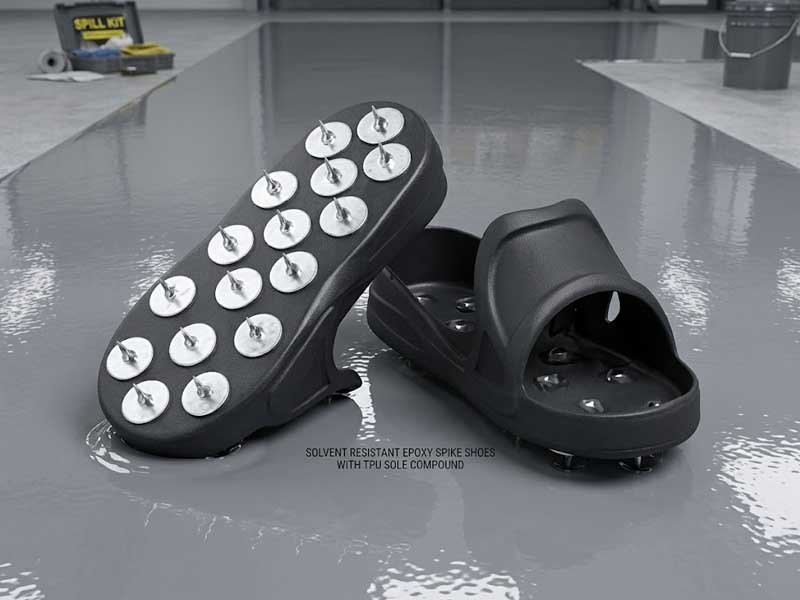
Where galvanized loses its durability advantage is in chemical environments — specifically sustained contact with acidic solvents, alkaline coatings, and epoxy systems. Zinc is reactive to both acid and strong alkali[^5]. In those conditions, the coating degrades, and the spike's structural integrity follows.
Breaking Down the Chemical Exposure Problem
| Environment | Galvanized Performance | Aluminum Performance |
|---|---|---|
| Epoxy resin flooring | Moderate — zinc reacts with epoxy solvents over time | Strong — aluminum oxide layer provides stable resistance[^6] |
| Polyurethane coatings | Moderate — alkaline primers can accelerate zinc loss | Strong — passive oxide layer withstands most PU systems |
| Self-leveling cement | Moderate — alkaline pH degrades zinc coating | Strong — aluminum resists alkaline pH effectively[^7] |
| Outdoor soil / moisture | Strong — zinc provides reliable oxidation barrier | Adequate — but overkill in pure moisture exposure |
| FRP lining / solvent environments | Weak — solvent exposure accelerates coating failure | Strong — preferred by specialty contractors for longevity |
| General hardware / dry storage | Strong — well-understood material, no chemical stressors | Strong — both materials appropriate |
The Buyer Segment That Gets This Wrong Most Often
The buyers we see make this mistake most often are hardware importers building a broad SKU catalog. They default to galvanized across their entire spike product range because it simplifies procurement and aligns with the general hardware market's familiarity with zinc-coated fasteners and tools. That logic holds for the outdoor and DIY segments of their catalog.
It breaks down when the same galvanized spike spec gets pushed into a flooring contractor supply bundle — for example, when a distributor adds epoxy spiked shoes to a floor coating kit. The spike now lives in an epoxy environment for hours per use, repeatedly. That is where the zinc degradation timeline becomes a brand problem.
The fix is not complex: segment the spike specification by end-use channel, not by catalog category. It requires one additional conversation during product development, and it prevents a category of returns that are otherwise very difficult to trace back to their source.
Does Aluminum Cost Less, and Does That Matter for Private Labels?
Aluminum is typically less expensive than galvanized steel at the raw material level[^8]. For private-label buyers, that cost difference is often the first thing noticed — and frequently misread.
The temptation is to position aluminum as the budget variant and galvanized as the premium specification. That framing is incorrect, and it causes real problems for brands trying to build mid-to-premium positioning in the flooring tools market.

Aluminum's lower cost reflects material cost structure, not performance grade. In the applications where aluminum is correctly specified — epoxy flooring, chemical exposure environments, FRP lining — it is the higher-performing material. A brand that sells aluminum-spiked shoes at a credible price point with clear application positioning is not making a compromise. It is making a correct material selection.
How the Cost Differential Actually Functions as a Margin Lever
Here is the practical math that matters for private-label buyers:
- Lower input cost + correct application positioning = margin expansion without brand dilution. The buyer captures the material cost advantage and passes none of it to the consumer if the product is properly differentiated by use case.
- Lower input cost + incorrect positioning (presented as "budget") = price compression, race-to-bottom competition, and a brand that cannot command sustainable retail margins.
The difference between these two outcomes is almost entirely in how the buyer frames the product at launch — and that framing starts with understanding why aluminum is the right material for the channel, not just the cheaper one.
What We Recommend for Private-Label Buyers in the Flooring Channel
For buyers supplying epoxy flooring contractors, concrete coating distributors, or commercial floor finishing brands, our recommendation is consistent:
- Specify aluminum spikes for the spike component in contact with chemical environments.
- Use the material selection as a product differentiator, not a cost disclosure. Position it as: "engineered for flooring applications" rather than "aluminum construction."
- Back the positioning with use-case documentation — application guides, product descriptions, and packaging copy that explain why aluminum performs in these environments.
- Do not mix aluminum and galvanized specs within the same SKU family aimed at flooring contractors. It creates buyer confusion about which product applies to which use case.
This approach has worked well for OEM buyers in the flooring distribution channel who have come back for second and third production runs. The material cost advantage funds better packaging, stronger branding, or simply healthier margins — none of which require compromising the product's credibility.
Which Buyer Segment Predicts Which Material?
Pattern recognition from real buyer conversations is the most reliable tool for matching spike material to buyer type. Laboratory corrosion data is useful context. Buyer reorder behavior is the ground truth.
From observed inquiry and fulfillment patterns across buyer types, two reliable clusters emerge. The first group consistently lands on aluminum. The second consistently lands on galvanized. The variables that predict which group a buyer belongs to are surprisingly consistent.
Buyers Who Consistently Reorder Aluminum
- Epoxy floor coating contractors and their distributors — direct, repeated chemical exposure is the daily use case.
- Amazon and Shopify sellers targeting flooring professionals — differentiated positioning on chemical resistance drives review quality.
- FRP lining and commercial roof waterproofing suppliers — specialty environments with solvent exposure; aluminum is often the only material that holds up.
- Building material distributors bundling tools with coating products — alignment with the coating's chemical environment is a sales argument that resonates with contractor buyers.
Buyers Who Consistently Reorder Galvanized
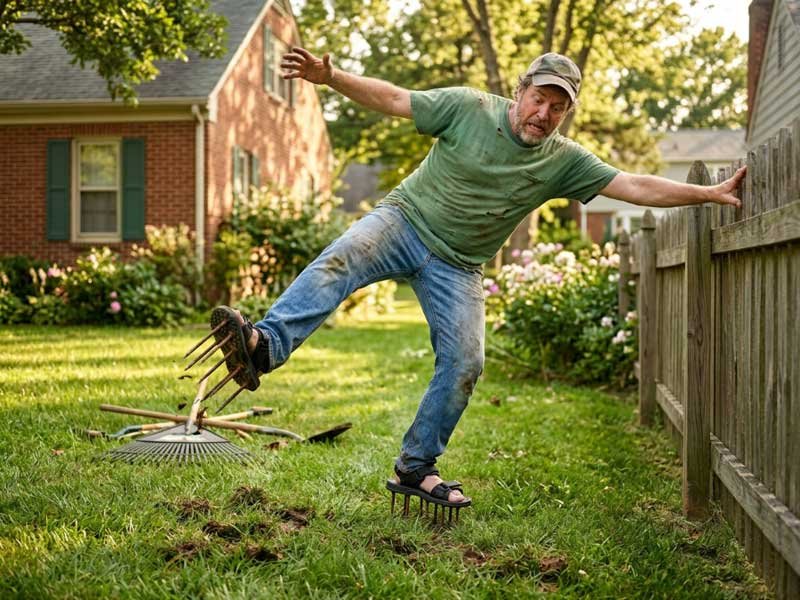
- Lawn and garden distributors — outdoor use, soil exposure, moisture; galvanized is the well-understood, trusted specification in this channel.
- General hardware importers and catalog distributors — broad customer base, no specific chemical exposure, galvanized covers the majority of use cases without over-engineering.
- Big-box retail supply chains — high volume, standardized SKUs, buyer familiarity with galvanized in outdoor tools is a sales floor advantage.
- Landscaping equipment brands — aerator shoes are a natural companion product; galvanized aligns with the rest of the product line's material language.
The Red Flag Inquiry Pattern
The buyer inquiry that signals the highest return risk is the one that mentions both epoxy flooring and outdoor use in the same product brief — essentially trying to build one SKU that covers both channels. This is almost always driven by a desire to simplify the catalog rather than serve either channel well.
Our standard recommendation in that scenario: develop two SKUs with distinct spike materials and distinct application positioning. The added complexity in manufacturing is minimal. The reduction in downstream return and complaint risk is significant. Buyers who have followed that advice have consistently reported cleaner reorder cycles and better review profiles on marketplace platforms.
Frequently Asked Questions
Can I use aluminum spikes for lawn aerator shoes?
Aluminum is functional in outdoor soil environments but is not the conventional specification for lawn aerator shoes. Galvanized spikes are the standard expectation in landscaping and garden distribution channels. Unless your product positioning specifically calls out chemical resistance as a feature, galvanized will align better with buyer expectations and reduce sourcing friction.
Does galvanized spike coating wear off faster in epoxy environments?
Zinc coatings are reactive to both acidic and strongly alkaline environments. Epoxy resin systems and their associated solvents can accelerate zinc coating degradation under sustained contact. This does not mean galvanized spikes fail immediately, but longevity in flooring applications is meaningfully shorter than in outdoor or dry-use environments. Buyers concerned about this should request material-specific evaluation for their exact application chemistry.
Is there a price difference between aluminum and galvanized spikes at the OEM level?
Yes, aluminum typically has a lower raw material cost than galvanized steel. However, the final OEM price reflects tooling, spike geometry, and volume — not just material cost. Buyers should request itemized quotes for both materials at their target order volume rather than assuming a fixed price gap.
How do I communicate spike material selection to my end customers?
Lead with the application environment rather than the material name. "Engineered for epoxy and chemical flooring applications" communicates more value to a flooring contractor than "aluminum spikes." For landscaping channels, "rust-resistant galvanized spikes for outdoor and soil use" aligns with buyer language. Material names are supporting detail, not the headline.
Can a single OEM order include both aluminum and galvanized spike configurations?
Yes. We support mixed-material production runs for buyers who serve multiple distribution channels. The practical requirement is clear SKU separation and adequate minimum order quantities for each configuration. Buyers building a flooring-plus-landscaping catalog should plan for two distinct SKUs from the start rather than attempting a single crossover specification.
Conclusion
The aluminum vs. galvanized spike decision is not a ranking exercise — it is a channel-routing decision. Aluminum spikes consistently outperform galvanized in chemical-exposure environments like epoxy flooring, FRP lining, and polyurethane coating applications. Galvanized spikes consistently deliver in outdoor, soil-contact, and general hardware applications where zinc's corrosion resistance is the relevant performance variable.
For private-label and OEM buyers, getting this call right upfront protects downstream brand trust, reduces return rates, and positions your product credibly in the channel you are actually serving. The cost structure of aluminum is a margin lever, not a brand liability — when the use case is confirmed.
If you are in the process of specifying spike material for a new product line or revising an existing SKU, contact our team at AeratorShoes.com before finalizing your brief. The right conversation at the quoting stage prevents the wrong inventory at the warehouse stage.
Contact us:
- WhatsApp / Phone: +86 15988980367
- Email: chunjiaojohn@gmail.com
[^1]: "DoD 2013-3557", https://www.waru.edu/sites/default/files/Migrated/CopDocuments/Examination%20of%20Zinc%20Galvanized%20Steel%20Corrosion%20Rates%20in%20Various%20Atmospheric%20and%20Soil%20Exposure%20Conditions.pdf. Corrosion failure analysis literature distinguishes between immediate manufacturing-related failures and delayed chemical degradation; zinc coating failures attributable to chemical incompatibility typically present after cumulative exposure periods, as the coating progressively thins before substrate corrosion becomes visible. Evidence role: mechanism; source type: research. Supports: Chemical exposure corrosion in zinc coatings typically manifests over weeks to months of sustained contact rather than immediately, distinguishing it from manufacturing defects. Scope note: The specific three-to-six month window cited in the article reflects observed buyer feedback patterns rather than controlled corrosion testing; actual timelines vary with exposure frequency, chemical concentration, and coating thickness.
[^2]: "Environment and economic analysis of reverse supply chain ...", https://pmc.ncbi.nlm.nih.gov/articles/PMC10032250/. B2B purchasing research indicates that product performance failures attributable to specification mismatch — rather than manufacturing defect — are a significant driver of supplier switching and reduced reorder rates; customers who experience delayed field failures are less likely to attribute the issue to their own specification decision, increasing churn risk for the supplying party. Evidence role: general_support; source type: research. Supports: Product specification accuracy relative to end-use environment is associated with reduced return rates and improved customer retention in B2B supply relationships. Scope note: The article's specific claim is based on the author's observed buyer inquiry and fulfillment patterns rather than a controlled study; the causal relationship between spike material specification and reorder behavior
[^3]: "DoD 2013-3557", https://www.waru.edu/sites/default/files/Migrated/CopDocuments/Examination%20of%20Zinc%20Galvanized%20Steel%20Corrosion%20Rates%20in%20Various%20Atmospheric%20and%20Soil%20Exposure%20Conditions.pdf. Zinc coatings protect underlying steel through two mechanisms: a physical barrier that isolates steel from the environment, and cathodic (sacrificial) protection whereby zinc preferentially corrodes at exposed areas; this dual mechanism is documented in standards including ASTM A123 and ISO 1461 and is the basis for galvanizing's widespread use in outdoor and infrastructure applications. Evidence role: expert_consensus; source type: institution. Supports: Zinc coatings on steel provide corrosion protection through both barrier and cathodic protection mechanisms in atmospheric and soil environments.
[^4]: "Lawn Aerator Shoes Pre-Assembled - 26 Heavy Duty Steel ...", https://www.amazon.com/Aerator-Upgraded-Aerating-Stainless-Assembled/dp/B09MZ42788. Product listings and category specifications for lawn aerator shoes across major hardware retail and wholesale channels predominantly feature galvanized steel spikes, consistent with the broader use of zinc-coated fasteners and components in outdoor garden and landscaping equipment where moisture and soil exposure are primary environmental stressors. Evidence role: historical_context; source type: other. Supports: Galvanized steel is the conventional spike material specification in lawn aerator shoes and outdoor garden tools sold through hardware and landscaping channels. Scope note: No formal industry standard specifically mandates galvanized spikes for aerator shoes; the 'long track record' claim reflects market convention rather than a codified specification, and product category norms may vary by region and distribution channel.
[^5]: "Zinc", https://en.wikipedia.org/wiki/Zinc. Zinc is classified as an amphoteric metal, reacting with hydrochloric acid to produce zinc chloride and hydrogen gas, and dissolving in sodium hydroxide to form zincate ions; this dual reactivity defines the pH range within which zinc coatings remain protective. Evidence role: definition; source type: encyclopedia. Supports: Zinc is an amphoteric metal that reacts with both acids and strong bases, dissolving in each to form soluble zinc compounds.
[^6]: "Evaluation of epoxy coatings for protecting aluminum alloy ...", https://ideaexchange.uakron.edu/cgi/viewcontent.cgi?article=1588&context=honors_research_projects. Aluminum spontaneously forms a thin aluminum oxide (Al₂O₃) passivation layer upon atmospheric exposure; this layer is chemically stable across a moderate pH range and provides resistance to many organic solvents and coating systems, though it can be disrupted by strongly alkaline conditions above approximately pH 9. Evidence role: mechanism; source type: research. Supports: Aluminum forms a thin, stable aluminum oxide layer upon exposure to oxygen that acts as a passive barrier against many chemical environments. Scope note: Aluminum's passivation layer is not universally resistant; strongly alkaline environments can dissolve it, which should be considered when specifying aluminum for high-pH coating systems.
[^7]: "Passivation performance of Nb microalloyed rebar in concrete ...", https://pmc.ncbi.nlm.nih.gov/articles/PMC11447213/. Aluminum's passive oxide layer is stable in near-neutral to mildly alkaline conditions but dissolves in strongly alkaline solutions (typically above pH 9–10), forming soluble aluminate ions; self-leveling cement systems vary in pH, and aluminum's suitability should be evaluated against the specific formulation's alkalinity rather than assumed universally. Evidence role: mechanism; source type: research. Supports: Aluminum resists moderate alkaline pH but can corrode in strongly alkaline environments; its performance in self-leveling cement depends on the specific pH of the system. Scope note: The article's table characterizes aluminum performance in self-leveling cement as 'strong' without qualification; this may overstate aluminum's resistance in high-pH cementitious systems and should be verified for specific product chemistries.
[^8]: "Producer Price Index - Metals and metal products", https://www.bls.gov/regions/mid-atlantic/data/producerpriceindexmetals_us_table.htm. Commodity metal pricing for aluminum and steel is tracked by exchanges including the London Metal Exchange (LME); relative pricing between aluminum and galvanized steel depends on global supply conditions, energy costs, and zinc premiums, and should be verified against current market data rather than treated as a fixed differential. Evidence role: statistic; source type: institution. Supports: Aluminum raw material costs relative to galvanized steel vary by market conditions, though aluminum has historically traded at different price points than steel. Scope note: Raw material price comparisons are highly time-sensitive; the claim that aluminum is 'typically less expensive' may not hold across all market conditions or product geometries, and fabricated component costs include tooling and processing that can invert raw material price relationships.