 跳到内容
跳到内容 
Every week, I receive dozens of procurement inquiries for lawn aerator shoes. The questions follow a predictable pattern: "What's your FOB price?" followed immediately by "Can I start with 100 pairs?" Then comes the inevitable confusion when I ask whether they plan to ship LCL or FCL. Most buyers approach these three factors—minimum order quantity, container loading, and FOB pricing—as separate negotiation points. That mindset costs them thousands of dollars in hidden expenses before their first container even reaches port.
The harsh truth from my factory floor: MOQ, container utilization, and FOB pricing are not three separate procurement parameters you can negotiate independently. They form an integrated cost structure system. If you optimize only one variable while ignoring the other two, you're not reducing your total landed cost—you're just shifting where the financial pain hits. Understanding how production economics, logistics geometry, and import duty structures interconnect is the only way to make rational order decisions and select suppliers who aren't hiding cost traps in their quotes.
After processing hundreds of commercial orders, I've learned that most procurement confusion doesn't stem from complicated manufacturing—it comes from buyers treating factory quotes like retail price tags. But when you're importing industrial tools in containerized freight, every decision triggers a cascade of cost consequences that standard e-commerce logic doesn't prepare you for.
Why Do Lawn Aerator Shoe Factories Set Minimum Order Quantities?
Most buyers assume MOQ is a sales tactic to force larger orders. In reality, it's a production economics constraint that has nothing to do with factory greed.
When you request a quote for lawn aerator shoes, the MOQ is not arbitrary—it's the mathematical break-even point where setup costs, material procurement minimums, and production line switching expenses become economically viable[^1]. Custom designs and standard SKUs carry completely different MOQ thresholds because they trigger different cost structures on the factory floor.
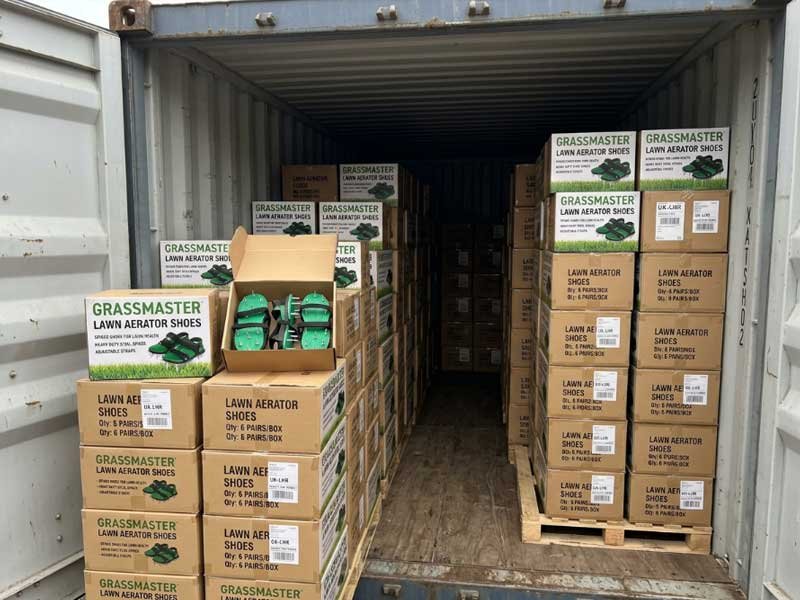
Let me show you the real numbers behind those MOQ figures in our quotation emails.
The Three Hard Costs That Define MOQ
When I switch our injection molding line from standard PP strap aerator shoes to a custom EVA one-piece design, three unavoidable cost categories hit the production budget:
Mold amortization cost: If you order a custom spike configuration or want your brand logo molded into the shoe base, we must manufacture a dedicated injection mold. In our factory, a basic single-cavity mold for EVA aerator shoes costs roughly USD 1,200–1,800[^2]. That's a fixed expense that gets divided across your order quantity. Order 500 pairs? You're paying $2.40–3.60 per pair just in mold recovery cost. Order 3,000 pairs? That drops to $0.40–0.60 per pair. The math is brutal and non-negotiable.
Production line switching cost: Our factory operates dedicated production lines for different product types (PP strapped models vs. EVA integrated models). Switching lines requires:
- Cleaning injection barrels and purging residual materials
- Recalibrating temperature zones and injection pressure
- Running quality test batches to verify spike alignment and strap tension
- Training operators on the specific assembly sequence
Based on actual production records, this switching process consumes 4–6 hours of machine time plus labor. At our facility, that translates to roughly $300–450 in lost productivity per switch. If you order 200 pairs, that's $1.50–2.25 per pair added before we've even started your actual production run.
Material batch procurement logic: Industrial polymers and steel spike materials aren't sold in small quantities[^3]. When we purchase virgin PP granules, the minimum supplier lot is typically 500 kg. High-tensile steel spikes come in batches of 50,000 pieces. If your order doesn't consume at least 80% of these material minimums, we're forced to hold excess inventory that ties up working capital and warehouse space. That carrying cost gets factored into pricing.
Standard vs. Custom: Why MOQ Multiplies by Three
In procurement inquiries, I often see buyers request 500 pairs of "standard aerator shoes with our logo engraved." They expect standard product pricing. That's not how production economics work.
Our standard PP strap aerator shoes (the models listed on our website) carry an MOQ of 500–1,000 pairs. These use existing molds, run on optimized production schedules, and source from pre-negotiated material contracts. The setup costs are already amortized across years of production.
But the moment you add any customization—spike length modification, strap color change, logo molding, or packaging alterations—you trigger custom production rules. The MOQ jumps to 2,000–3,000 pairs minimum. Here's why:
| Cost Factor | Standard Product | Custom Product |
|---|---|---|
| Mold cost | $0 (already amortized) | $1,200–1,800 (new tooling) |
| Line switching frequency | Scheduled batches | One-off interruption |
| Material procurement | Bulk inventory | Special-order lot |
| Quality verification | Established process | New inspection protocol |
| Effective cost per pair | Base production only | Base + $2–5 premium |
When buyers push back on custom MOQ requirements, I explain: your 500-pair custom order would carry a $6–8 per pair cost penalty compared to a 3,000-pair order. That's not negotiation leverage—it's production math.
The Real Conversation Buyers Should Have
Instead of asking "Can you lower the MOQ to 300 pairs?" the strategic question is: "What's the cost difference between your standard configurations at 1,000 pairs versus my custom design at 3,000 pairs?"
In my experience processing commercial orders, buyers who understand cost structure trade-offs make three smart decisions:
- Start with standard SKUs for market testing (lower MOQ, faster turnaround)
- Accumulate sales data for 6–12 months before committing to custom tooling
- Consolidate custom orders across multiple SKU variations to hit mold amortization thresholds
This approach doesn't just lower per-unit costs—it eliminates the financial risk of holding unsold custom inventory in a product category where you haven't proven market demand yet.
How Does Container Loading Capacity Affect Your Total Procurement Cost?
Most buyers focus obsessively on FOB unit pricing while ignoring the logistics geometry that determines their actual landed cost. But when you're importing aerator shoes in containerized freight, your loading efficiency can swing total costs by 30–40%[^4].
Container utilization rate is not a shipping detail—it's a direct determinant of per-unit logistics cost. The economic break-even point between LCL (Less than Container Load) and FCL (Full Container Load) depends on your order quantity, the destination port's consolidation fees, and the three-dimensional packing density of your specific product configuration. Buyers who optimize only FOB pricing without calculating container geometry are leaving massive savings on the table.
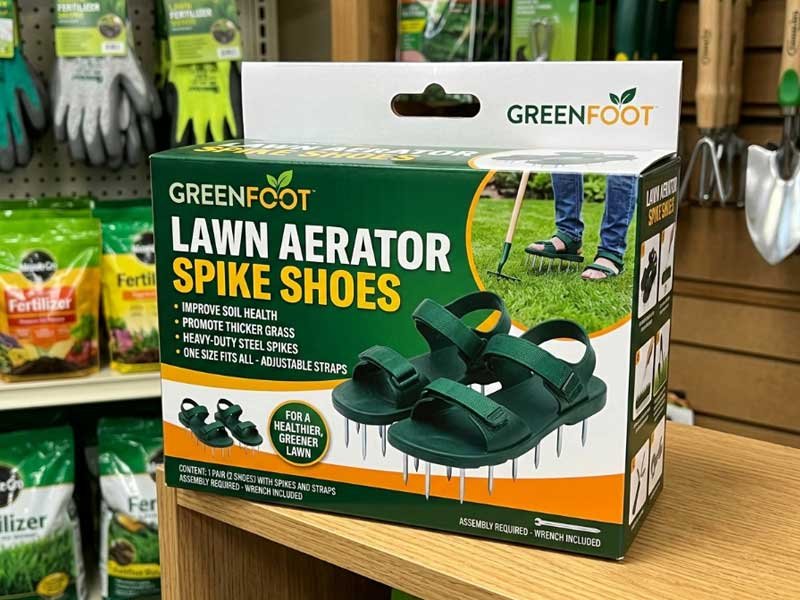
Let me walk you through the real loading numbers and cost implications I use when quoting orders.
The Packing Density Reality of Aerator Shoes
Unlike compact tools or folding hardware, aerator shoes have an awkward geometry for containerization. The protruding spikes and strap assemblies create air gaps that reduce effective loading density.
Based on actual loading data from our shipping department, here's what different container types hold:
20ft Standard Container:
- Internal dimensions: 5.9m (L) × 2.35m (W) × 2.39m (H)
- Practical capacity: 4,500–5,500 pairs (depending on model)
- PP strap models pack tighter (more pairs per container)
- EVA integrated models waste more cubic space (bulkier shape)
40ft Standard Container:
- Internal dimensions: 12.03m (L) × 2.35m (W) × 2.39m (H)
- Practical capacity: 9,500–11,000 pairs
- Not quite double the 20ft capacity due to packing inefficiency
40ft High Cube Container:
- Internal dimensions: 12.03m (L) × 2.35m (W) × 2.69m (H)
- Practical capacity: 11,000–13,000 pairs
- Best value for high-volume importers
These aren't theoretical maximums—they're conservative estimates based on mixed-SKU shipments with protective packaging.
LCL vs. FCL: The Cost Crossover Point
When buyers request quotes for 800 pairs, I always ask: "Are you planning to ship LCL or wait until you can fill a container?"
The answer determines their logistics cost structure:
LCL (Shared Container Shipping):
- You pay only for the cubic meters you occupy
- Freight forwarders charge consolidation fees (typically $50–120 per CBM depending on destination port)[^5]
- Additional handling fees at destination port ($150–300)
- Longer transit time (2–3 weeks extra for consolidation)
- Higher damage risk from multiple handling
FCL (Full Container Exclusive):
- Fixed container rate regardless of how full you pack it
- Direct port-to-port shipping (faster, fewer touchpoints)
- Lower per-unit cost once you cross the minimum threshold
- You control the entire container (better inventory planning)
The crossover point where FCL becomes cheaper than LCL typically occurs around 2,500–3,000 pairs for most North American and European destinations. But this threshold shifts based on:
- Your destination port's LCL handling fees (high-cost ports like Los Angeles have expensive consolidation)
- Current ocean freight rates (volatile; can swing 40% quarter-to-quarter)
- Whether you're importing other products that can share the container
The Invisible Cost of Under-Filling Containers
Here's the scenario I see constantly: A buyer orders 6,000 pairs—enough to fill a 20ft container with room to spare. But they don't order enough to justify a 40ft container. They're leaving money on the table.
Assume these freight costs (rough industry averages; actual rates fluctuate):
- 20ft container to U.S. West Coast: $2,800
- 40ft container to U.S. West Coast: $4,200
If you order exactly 5,000 pairs, your per-pair freight cost is $0.56. But if you increase to 10,000 pairs and ship 40ft FCL, your per-pair freight drops to $0.42—a 25% reduction in ocean freight alone.
Now multiply that by the thousands of pairs you'll import over a year. The buyers who optimize container fill rates save enough on logistics to fund their next product line expansion.
How I Help Buyers Reverse-Engineer Order Quantities
When processing procurement inquiries, I don't just quote FOB prices—I provide container optimization scenarios:
"Your requested 4,000 pairs will fill one 20ft container at 73% capacity. If you increase to 5,200 pairs, you'll hit 95% utilization and reduce per-unit freight cost by $0.18. Alternatively, if you consolidate two SKU variations into a single 9,500-pair order, you can ship 40ft FCL and save an additional $0.14 per pair."
This isn't sales pressure—it's production planning transparency. Buyers who approach containerization strategically place orders that align with shipping economics, not arbitrary psychological thresholds.
What Hidden Costs Are Buried in FOB Pricing?
When buyers see "FOB Ningbo $8.50/pair" in a quotation, they assume that's the real cost. It's not even close. FOB pricing is just the manufacturing and inland logistics portion—the tip of the cost iceberg. The expenses that hit your bank account after the container leaves China often exceed the FOB price itself.
FOB price represents only the ex-factory cost plus transport to the load port. For importers, the real financial burden includes destination port fees, customs clearance charges, import duties, value-added taxes, container demurrage penalties, and domestic distribution costs. Buyers who budget based on FOB pricing alone face cash flow crises when their container arrives and the hidden cost avalanche begins.
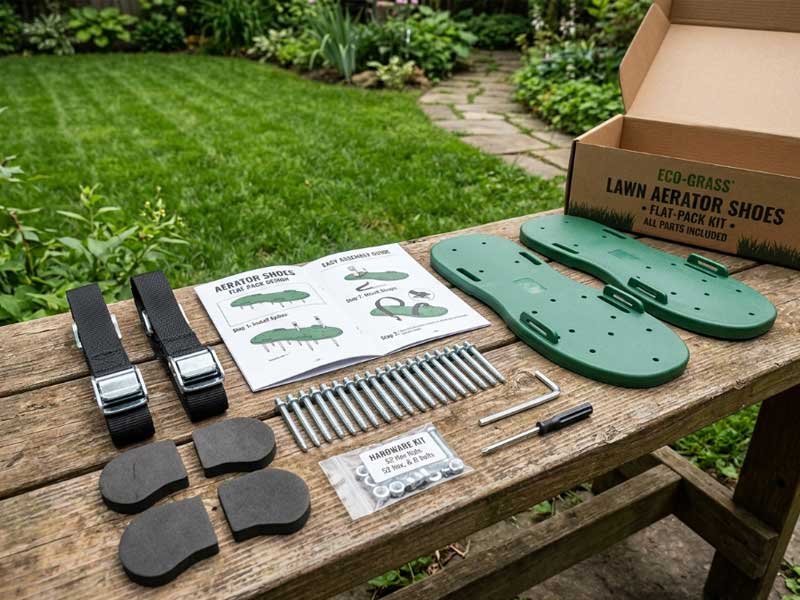
After watching hundreds of commercial orders clear customs, I've learned that cost transparency requires breaking down what FOB includes, what it explicitly excludes, and where procurement budgets silently bleed out.
What FOB Ningbo Actually Covers
When our quotation lists FOB Ningbo pricing, here's what that fee includes from our side:
- Manufacturing cost: Raw materials (PP/EVA polymers, steel spikes), injection molding, assembly labor, and quality inspection
- Packaging cost: Individual poly bags, inner cartons, outer master cartons, and pallet wrapping if requested
- Inland freight: Trucking from our Taizhou factory to Ningbo port (roughly 120 km)
- Export documentation: Commercial invoice, packing list, and standard export customs clearance in China
- Port loading fees: Container stuffing at the warehouse and drayage to the vessel
That's it. The moment the container is loaded onto the ship, FOB responsibility ends. Everything after that is your cost, your risk, and your logistics problem.
The Six Hidden Cost Categories Buyers Forget
In procurement inquiries, buyers ask: "Why is my total cost 60% higher than your FOB quote?" Because they didn't account for these mandatory expenses:
1. Ocean freight: This is the most visible post-FOB cost, but it's also the most volatile. Container rates fluctuate wildly based on seasonal demand, fuel surcharges, and port congestion. When buyers lock in a price based on historical freight assumptions, they get blindsided by rate increases that can swing $1,500–3,000 per container during peak shipping season.
2. Destination port handling fees: Once your container arrives at Los Angeles, Rotterdam, or Sydney, the port authority charges:
- Terminal handling charges (THC)
- Container unloading fees
- Documentation processing
- Port security fees
These aren't negotiable, and they vary by port. High-traffic ports often charge premium rates that smaller regional ports don't.
3. Customs clearance and brokerage: Unless you have in-house customs expertise, you'll hire a freight forwarder or customs broker. They charge service fees to:
- Submit import entry documentation
- Verify tariff classification (lawn aerator shoes typically fall under HS Code 6402.19[^6] or similar, depending on material)
- Arrange customs inspection if flagged
- Pay duties and taxes on your behalf
Brokerage fees typically range from $100–500 per shipment[^7], but complex classifications or regulatory compliance issues can multiply those costs.
4. Import duties and taxes: This is where buyers suffer the biggest sticker shock. Depending on your destination country, you'll face:
- Import duties (tariff rates vary by product classification and origin country)
- Value-added tax (VAT) or goods and services tax (GST)
- Potential anti-dumping duties if trade disputes affect product categories
For example, a buyer importing 5,000 pairs at FOB $8.50/pair has a customs value of $42,500. If their country charges a 15% import duty plus 10% VAT, they're immediately paying an additional $10,625 before the container even leaves the port. That's $2.13 per pair on top of all other costs.
5. Container demurrage and storage: Ports give you a limited "free time" window (typically 5–7 days) to clear customs and remove your container. If your paperwork is delayed, or if your warehouse isn't ready to receive the shipment, ports charge demurrage fees (often $75–150 per day)[^8]. A one-week delay can add $525–1,050 to your total cost.
6. Domestic distribution: After clearing customs, you still need to transport the container from the port to your warehouse or distribution center. Drayage costs, unloading fees, and inland trucking add another layer of expense that varies by distance and local logistics rates.
How Total Landed Cost Changes Procurement Decisions
In my experience processing orders, buyers who calculate total landed cost upfront make fundamentally different decisions than those who chase the lowest FOB price.
Consider two competing offers:
- Factory A: FOB $8.20/pair, MOQ 3,000 pairs (forces LCL shipping for a 2,000-pair test order)
- Factory B: FOB $8.80/pair, MOQ 1,000 pairs (allows immediate FCL fill rate)
At first glance, Factory A looks cheaper. But when you run the full landed cost calculation including higher LCL freight, consolidation fees, and extended lead time, Factory B's higher FOB price might deliver a lower total cost per pair because of superior logistics efficiency.
This is why I always ask buyers during quote requests: "What's your target total landed cost, not just FOB ceiling?" That question forces them to think about the entire supply chain, not
[^1]: "Raw Material Minimum Order Quantity Optimization", https://dspace.mit.edu/bitstream/handle/1721.1/121302/1240293813-MIT.pdf?sequence=1. Manufacturing economics literature explains that minimum order quantities arise from the need to amortize fixed setup costs (mold changes, line configuration, material batch minimums) across sufficient unit volume to reach break-even thresholds. Evidence role: mechanism; source type: education. Supports: how fixed setup costs create minimum viable production quantities. Scope note: General manufacturing principle; specific cost ratios vary by industry and factory scale
[^2]: "[PDF] Prototyping of Injection EVA Foam Footwear Midsoles - DSpace@MIT", https://dspace.mit.edu/bitstream/handle/1721.1/146701/galgali-amgalg-lgo-2022-thesis.pdf?sequence=1&isAllowed=y. Industry data on injection molding tooling indicates that single-cavity molds for small plastic parts typically range from $1,000 to $5,000, with complexity, material, and cavity design affecting final costs. Evidence role: statistic; source type: research. Supports: typical cost ranges for small-scale injection molds. Scope note: Price ranges vary significantly based on mold complexity, material specifications, and regional manufacturing costs
[^3]: "Minimum Order Quantity (MOQ): Formula, Tips, & Benefits | NetSuite", https://www.netsuite.com/portal/resource/articles/inventory-management/minimum-order-quantity-moq.shtml. Supply chain management literature documents that industrial raw material suppliers typically enforce minimum order quantities due to production economies, transportation efficiency, and inventory management considerations. Evidence role: general_support; source type: education. Supports: why industrial material suppliers impose minimum order quantities.
[^4]: "The Hidden Efficiency of Container Optimization in Logistics", https://magiclogic.com/container-optimization/. Supply chain research demonstrates that optimizing container loading can significantly reduce per-unit transportation costs, as the fixed cost of container freight is distributed across more units when loading efficiency improves, with underutilized containers directly increasing per-unit costs. Evidence role: general_support; source type: research. Supports: how container utilization rates affect per-unit logistics costs. Scope note: Actual cost impact varies based on freight rates, commodity type, packing characteristics, and whether comparing LCL alternatives or different container sizes
[^5]: "Hidden Costs of LCL Shipping: How to Calculate & Avoid ...", https://www.searates.com/blog/post/hidden-costs-of-lcl-shipping-how-to-calculate-avoid-extra-fees. Freight industry data shows LCL consolidation charges vary widely by trade lane, with rates typically ranging from $40 to $150+ per cubic meter depending on origin-destination pair, cargo type, and handling requirements. Evidence role: statistic; source type: research. Supports: typical pricing ranges for LCL consolidation services. Scope note: Rates are highly volatile and vary significantly by route, season, and individual carrier pricing
[^6]: "2026 HTS Revision 12 - Harmonized Tariff Schedule", https://hts.usitc.gov/search?query=shoe. The Harmonized System (HS) heading 6402 covers footwear with outer soles and uppers of rubber or plastics, with subheading 6402.19 applying to sports footwear other than ski-boots and snowboard boots, though exact classification depends on specific product characteristics and national tariff schedules. Evidence role: definition; source type: government. Supports: tariff classification standards for footwear products. Scope note: Final classification requires evaluation of specific product features and may vary by importing country's interpretation
[^7]: "Customs Broker Fees - U.S. Customs and Border Protection", https://www.cbp.gov/trade/programs-administration/customs-brokers/fees. Customs brokerage fees in major markets typically range from $50 to $500+ per entry, depending on shipment complexity, cargo value, required documentation, and whether additional services like tariff classification research or regulatory compliance consultation are needed. Evidence role: statistic; source type: research. Supports: standard fee ranges for customs brokerage services. Scope note: Pricing varies significantly based on broker, shipment complexity, cargo value, and additional services required
[^8]: "What Is Container Demurrage? Avoid Port Storage Fees - ExFreight", https://www.exfreight.com/what-is-container-demurrage-how-to-avoid-costly-port-storage-fees/. Container demurrage rates vary significantly by port and market conditions but commonly range from $75 to $300+ per container per day, with charges often increasing progressively for extended storage periods. Evidence role: statistic; source type: research. Supports: typical daily rates for container storage beyond free time. Scope note: Rates fluctuate based on port congestion, terminal policies, container type, and negotiated service agreements


