跳到内容
跳到内容 
When customers call me frustrated because their lawn still floods after aeration, I know exactly what went wrong—they used spikes that were too short for their clay soil. After years of handling returns and consultations from homeowners wrestling with compacted clay lawns, I've learned that spike length isn't just a measurement—it's the difference between breaking through that rock-hard layer where water gets trapped and wasting money on equipment that scratches the surface. Most generic aerator recommendations fail on clay because they treat all soils the same, ignoring how deep that concrete-like compaction layer actually sits.
For clay lawns, you need spikes between 2.5 to 3 inches long to penetrate past the compacted hardpan layer where water accumulates—shorter spikes leave the problem intact, while longer spikes create balance and fatigue issues that make the aerator unusable. The right length depends on how long water sits on your lawn after rain (indicating compaction depth), how hard the soil is when you try to dig (revealing hardpan thickness), and your physical ability to handle heavier equipment over large areas.
Most homeowners discover they have clay soil only after their lawn turns into a swamp every spring[^1], and then they grab the first aerator they find online—usually one with 2-inch spikes because that's what every generic guide recommends. Three months later, they're back looking for something different because nothing changed. That pattern repeats so often in my customer conversations that I've learned to ask different questions: not "what's your soil type?" but "when it rains, how long does the water sit there?"
Why Do Short Spikes Fail on Clay Lawns?
Short aerator spikes—anything under 2 inches—don't fail because they're poorly made or badly designed. They fail on clay lawns because they never reach the actual problem.
Short spikes (under 2 inches) can't penetrate deep enough to breach the hardpan compaction layer in clay soil, which typically sits 2-3 inches below the surface—this means the water drainage problem remains unsolved even after you've walked across your entire lawn with spikes strapped to your boots.
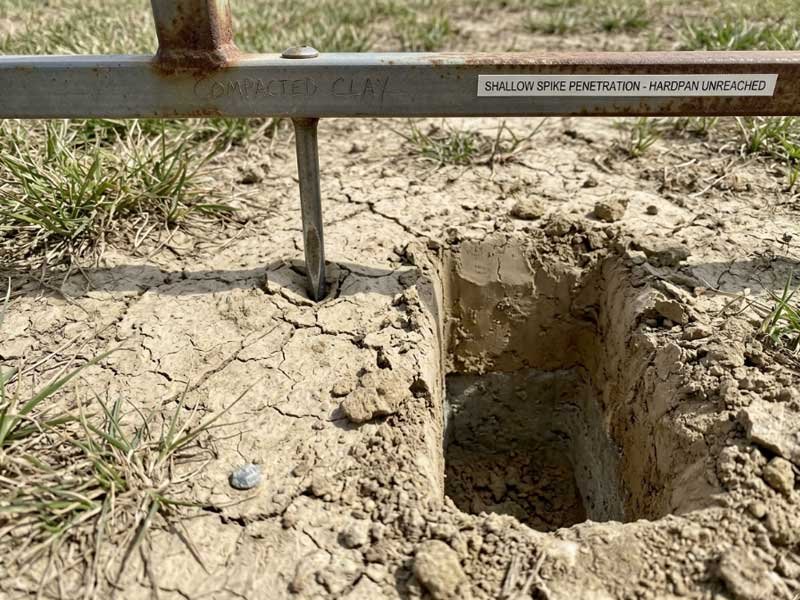
Here's what I've learned from customers who tried short spikes first: clay soil develops a dense, cement-like layer just below the surface from years of foot traffic, rain compaction, and its natural tendency to bind tightly when particles dry[^2]. That hardpan layer is where water gets trapped—it can't drain down because the soil below is impermeable[^3], and it can't drain sideways fast enough because clay holds water like a sponge wrapped in plastic[^4].
The Hardpan Reality Check
When customers tell me their lawn still puddles after using a standard aerator, I ask them to try something: take a screwdriver and push it into the soil after a moderate rain. If it goes in easily for the first inch and then hits something that feels like concrete, they've found their hardpan layer. That's the barrier that needs breaking.
Short spikes might create surface holes that look impressive, but if those holes don't penetrate past the hardpan, they're essentially decorative. Water flows into them, hits the compacted layer, and stops. The lawn still floods. The customer still has a problem. And I usually get a return request within 60 days.
The Measurement Gap
The tricky part is that most soil type guides tell you "clay soil needs deeper aeration" without explaining what that actually means in operational terms. A homeowner reads that, sees their soil described as clay on a county soil map, and buys 2-inch spikes because that sounds substantial. What they don't realize is that "deeper" means breaking past a specific geological feature—the compaction boundary—not just adding an extra half-inch of penetration.
I've noticed that customers who succeed on the first purchase are usually the ones who describe their symptoms instead of their soil type: "Water sits for 6+ hours after rain," "I can barely get a shovel into the ground," "My previous aerator made holes but nothing improved." Those descriptions tell me exactly how deep the compaction goes, which tells me what spike length they actually need.
The False Economy
Short spikes cost less and weigh less, which makes them appealing for homeowners who don't want to invest much or who worry about the physical demands of aeration. I understand that logic. But when those spikes don't solve the problem, customers end up buying again—and now they've spent more money and wasted a season of lawn recovery time.
The customers who come back after a failed first attempt are usually the most frustrated, not because the product was defective but because they trusted generic advice that didn't account for their specific soil conditions. That frustration is preventable, which is why I push people toward honest diagnosis before purchase rather than after.
What About Longer Spikes – Are 3+ Inches Better?
Longer spikes solve the penetration problem, but they create a different set of challenges that often surprise first-time buyers. I've had plenty of customers return 3.5-inch and 4-inch spike aerators even though those products would technically work perfectly for their clay soil.
Spikes longer than 3 inches penetrate deep enough to break through clay compaction, but they significantly increase the weight and balance difficulty[^5] of aerator shoes—this creates user fatigue and stability issues that cause many homeowners to abandon the project halfway through or return the product despite its technical suitability.
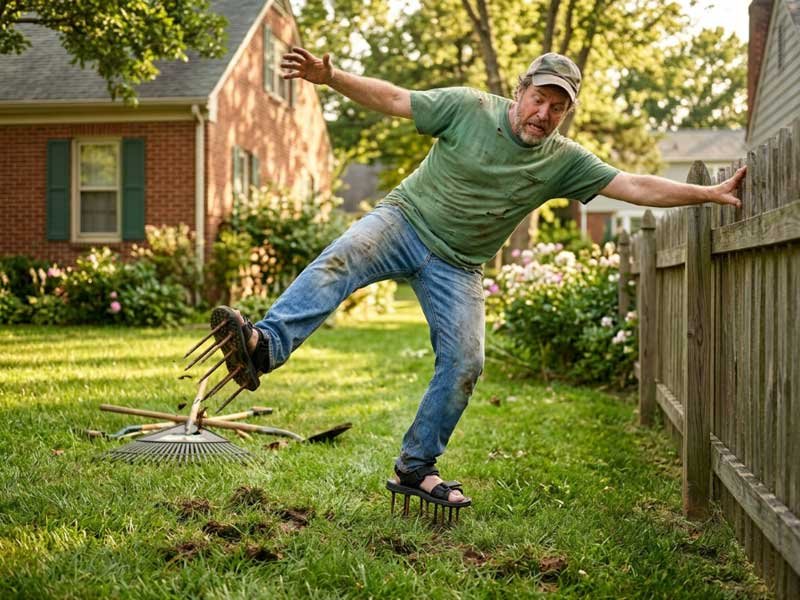
The physics are simple: longer spikes mean more steel weight on your feet, and that weight compounds with every step across a lawn. What feels manageable for the first hundred steps becomes exhausting by the time you've covered a quarter acre. I've had customers tell me they could only aerate for 15-20 minutes before needing to rest, which turns a 2-hour project into a full-day ordeal.
The Balance Problem
Longer spikes also change how the aerator shoes interact with your natural walking motion. When spikes extend 4 inches below your boot sole, you're walking on stilts that punch into the ground with each step. That's inherently unstable, especially on uneven terrain or when the clay is wet and sticky. Several customers have described near-falls or twisted ankles when a long spike caught on a root or stone beneath the surface.
This isn't about user error or poor fitness—it's about the mechanical reality of how weight distribution works when you strap metal spikes to your feet. The longer the spike, the higher your center of gravity shifts[^6], and the more your balance depends on consistent ground conditions that clay lawns rarely provide.
The Completion Rate Issue
What good is the technically perfect spike length if you can't finish aerating your lawn? I've noticed a pattern in return explanations: customers with 3+ inch spikes often report completing only partial coverage because the physical demands exceeded what they anticipated. They aerated the front lawn but gave up on the back. They did one pass instead of the recommended overlapping pattern. They stopped after 30 minutes when fatigue set in.
Partial aeration on clay can actually make drainage worse in some cases—you've created channels in one area that concentrate water flow, but the unaerated sections still repel water, so you get localized flooding instead of general puddling. It's a subtle failure mode that wouldn't happen if the customer had chosen a slightly shorter spike they could actually operate long enough to complete the job properly.
How Do You Diagnose the Right Spike Length for Your Clay Lawn?
Here's where most guides fail homeowners: they give you a soil type chart and a recommended spike length, then send you on your way. But clay soil isn't a single condition—it's a spectrum of compaction severity that requires diagnosis before purchase, not troubleshooting after.
The right spike length for your clay lawn depends on three observable conditions: how long water stands after rain (indicating compaction depth), how difficult it is to manually dig through the soil (revealing hardpan density), and whether you've already tried shorter aerators that failed (confirming the compaction extends past shallow depths).

When customers ask me what length they need, I walk them through a simple diagnostic process that takes about 10 minutes and requires no special equipment:
Water Standing Duration Test
After a moderate rain (not a downpour, just steady precipitation for an hour or two), go outside and check your lawn. Mark a spot where water has pooled, then check it every 2 hours. How long until that puddle disappears?
- Water drains within 2-4 hours: Your compaction is moderate—2.5 inch spikes will likely penetrate far enough to break through the hardpan.
- Water stands for 4-12 hours: Compaction is severe—you're looking at 3 inch spikes minimum to reach the drainage layer below the hardpan.
- Water visible after 12+ hours: You have extreme compaction, possibly with multiple hardpan layers—3 inch spikes are necessary, and you may need multiple aeration passes over several seasons to fully restore drainage.
This test works because water standing duration directly correlates with how deep and dense the impermeable layer is. The longer water sits, the deeper you need to punch through.
Manual Penetration Test
Get a long screwdriver (8-10 inches is ideal) and find a spot in your lawn where you've noticed poor drainage. Push the screwdriver straight down into the soil with steady pressure. Pay attention to where you meet resistance.
- Resistance starts immediately at surface: Your clay is surface-compacted but may not have deep hardpan—2.5 inch spikes might work if you aerate when soil is slightly moist.
- Easy penetration for 1-2 inches, then hard resistance: Classic hardpan scenario—you need 2.5 to 3 inch spikes to break past that layer.
- Can't penetrate more than 1 inch even with force: Severe surface compaction, likely with thick hardpan below—3 inch spikes, and consider aerating after a rain when soil has softened slightly.
If you can't push a screwdriver down at all, your clay is so compacted that manual aerator shoes might not be effective—you may need powered equipment or professional core aeration before spike aerators become viable.
Previous Aerator Failure Analysis
If you've already tried aerating with shorter spikes and saw no improvement, that's actually valuable diagnostic information. When customers tell me "I used an aerator but nothing changed," I ask specific questions:
| What Happened After Aeration | What It Tells You | Recommended Spike Length |
|---|---|---|
| Holes filled with water, lawn still flooded | Spikes didn't reach drainage layer | Add 0.5-1 inch to previous length |
| Could barely push spikes into ground | Soil too dry or compaction too severe | Try again after rain, or increase length |
| Completed aeration but gave up halfway | Previous spikes too long/heavy | Try 0.5 inch shorter with better weight distribution |
| Holes visible but closed up within days | Clay rebounded because holes weren't deep enough | Increase length by 1 inch minimum |
Customer feedback like this cuts through all the theoretical soil science and tells me exactly what's happening beneath the surface. If someone's already spent money and time on a failed attempt, I owe them specific guidance based on that experience rather than generic recommendations.
The Soil Moisture Variable
One factor many homeowners overlook: clay soil behaves completely differently when wet versus dry. When dry, it's almost concrete-hard and resists penetration from even long spikes. When saturated, it's slippery and unstable, making balance difficult. The sweet spot is "moist but not muddy"—when soil gives slightly under pressure but still has enough structure to support your weight.
I tell customers to plan aeration for 24-48 hours after a moderate rain, when soil has absorbed moisture but surface water has drained[^7]. In this condition, a 2.5 inch spike might penetrate as effectively as a 3 inch spike in dry conditions, while being much easier to operate. Timing can sometimes substitute for extra spike length, though this only works if your compaction isn't extreme.
What Spike Length Do Most Clay Lawn Owners Actually Need?
After years of matching customers to products and tracking what works versus what comes back as returns, I've noticed a clear pattern in successful clay lawn aeration.
Most homeowners with moderately compacted clay lawns succeed with 2.5 to 3 inch spikes—this length penetrates deep enough to break through typical hardpan layers (1.5-2.5 inches below surface) while remaining operable for the 1-2 hours needed to aerate an average residential lawn.
The 2.5-3 inch range hits the operational sweet spot: long enough to reach the compaction problem, short enough that most adults can physically handle the equipment long enough to complete the job. Customers who buy within this range rarely return products, and when they follow up months later, they usually report visible drainage improvement.
The 2.5 Inch Threshold
I recommend 2.5 inch spikes to customers who:
- Experience water standing for 4-6 hours after rain
- Can push a screwdriver 1-2 inches into soil before hitting hard resistance
- Have relatively flat, even lawn terrain
- Plan to aerate in optimal moisture conditions (1-2 days after rain)
This length works because most clay hardpan layers develop between 1.5 and 2.5 inches below the surface in residential lawns[^8]. The 2.5 inch spike penetrates just deep enough to crack that layer and create drainage channels without adding excessive weight or balance challenges.
When to Go to 3 Inches
I push customers toward 3 inch spikes when:
- Water stands for 6-12+ hours after rain
- Previous 2-inch aerators failed to improve drainage
- Lawn has heavy foot traffic or vehicle compaction history
- Soil is consistently difficult to dig through (landscaping challenges)
The extra half-inch makes a bigger difference than it sounds—it's often the difference between just touching the bottom of the hardpan and fully breaching it. Several customers have told me they tried 2.5 inch spikes first with minimal improvement, then switched to 3 inch and finally saw their drainage problems resolve.
The 3+ Inch Consideration
Spikes longer than 3 inches are rarely necessary for residential clay lawns, in my experience. The customers who need them usually have commercial-grade compaction from years of heavy equipment use, or they're dealing with clay soil that's been severely neglected for decades.
If your diagnostic tests suggest you need more than 3 inches, I'd honestly recommend consulting with a professional lawn service first. At that severity, you might be dealing with drainage issues that go beyond surface compaction—subsurface clay layers, poor yard grading, or water table problems[^9] that spike aeration alone won't solve. Better to invest in a professional assessment than buy increasingly extreme DIY equipment that might not address the root cause.
The Physical Capability Factor
One consideration I always mention: your own physical capability matters more than people expect. A 160-pound person will find 3 inch spikes much more manageable than a 120-pound person will, simply because the weight-to-body-mass ratio affects fatigue and balance differently.
I've had smaller customers report excellent results with 2.5 inch spikes on moderately compacted clay, while larger customers comfortably handled 3 inch spikes on the same soil type. There's no shame in choosing slightly shorter spikes if it means you'll actually complete the aeration—partial coverage with perfect spikes is worse than full coverage with slightly shorter ones.
[^1]: "Got Compaction? How to Improve Soil Drainage | UC Master Gardeners of ...", https://ucanr.edu/site/uc-master-gardeners-placer-county/article/got-compaction-how-improve-soil-drainage. Extension services report that drainage complaints—particularly spring flooding and persistent standing water—are among the most common ways residential property owners first recognize problematic clay soil conditions. Evidence role: general_support; source type: education. Supports: that poor drainage and seasonal flooding are common indicators by which homeowners identify clay soil problems. Scope note: Based on extension service observations rather than systematic survey data
[^2]: "Understanding and Managing Soil Compaction in Agricultural ...", https://pubs.nmsu.edu/_circulars/CR672/. Clay soils form hardpan layers through a combination of mechanical compaction from surface pressure and physicochemical processes where clay particles bind tightly during wet-dry cycles, creating dense, low-permeability zones typically 1-3 inches below the surface. Evidence role: mechanism; source type: education. Supports: the physical and chemical processes by which clay soils develop compacted hardpan layers. Scope note: General soil science principles; specific depth and density vary by clay type, climate, and land use history
[^3]: "How Soil Holds Water - SDSU Extension", https://extension.sdstate.edu/how-soil-holds-water. Compacted hardpan layers exhibit dramatically reduced hydraulic conductivity—often 10-100 times lower than uncompacted soil—creating a barrier that prevents vertical water movement and causes surface ponding. Evidence role: mechanism; source type: research. Supports: how compacted soil layers restrict water infiltration and drainage.
[^4]: "How Soil Holds Water - SDSU Extension", https://extension.sdstate.edu/how-soil-holds-water. Clay soils have high water-holding capacity due to small particle size and large surface area, but their drainage rates are extremely slow—often less than 0.06 inches per hour—because the small pore spaces between particles restrict water movement. Evidence role: general_support; source type: government. Supports: the water retention and drainage properties of clay soils.
[^5]: "Validity of weight distribution and sway measurements ...", https://pubmed.ncbi.nlm.nih.gov/10785908/. Ergonomic studies of manual lawn care equipment demonstrate that increased tool weight and altered center of gravity significantly increase user fatigue and reduce task completion rates, particularly for repetitive activities requiring balance. Evidence role: general_support; source type: research. Supports: how equipment weight and design affect user fatigue and stability during manual lawn care tasks. Scope note: General ergonomic principles applied to lawn care context; specific data on aerator spike length effects may be limited
[^6]: "High heeled shoes: their effect on center of mass position, posture ...", https://pubmed.ncbi.nlm.nih.gov/8185452/. Biomechanical principles establish that elevating the base of support raises the body's center of gravity, reducing stability by increasing the moment arm for destabilizing forces and requiring greater corrective muscle activation to maintain balance. Evidence role: mechanism; source type: education. Supports: how elevating the feet affects center of gravity and stability.
[^7]: "Compaction and Cultivation : Turf", https://www.umass.edu/agriculture-food-environment/turf/fact-sheets/compaction-cultivation. Turfgrass extension guidelines recommend aerating when soil is moist but not saturated—typically 1-2 days after rainfall—as this condition allows adequate penetration while maintaining soil structure and minimizing equipment difficulties. Evidence role: general_support; source type: education. Supports: recommended soil moisture conditions and timing for effective lawn aeration.
[^8]: "9. Traffic Stress & Turf Cultivation - UMass Amherst", https://www.umass.edu/agriculture-food-environment/turf/best-management-practices-bmps-for-lawn-landscape-turf/9-traffic-stress-turf-cultivation. Studies of residential lawn compaction show that traffic-induced hardpan layers commonly develop in the upper 2-4 inches of soil, with peak density often occurring at 1-3 inches depth where foot traffic pressure is concentrated. Evidence role: general_support; source type: research. Supports: the typical depth at which traffic-induced compaction layers form in residential lawn soils. Scope note: Exact depth varies with soil type, traffic intensity, and lawn management practices
[^9]: "Addressing Drainage Issues in the Urban Landscape", https://extension.okstate.edu/fact-sheets/addressing-drainage-issues-in-the-urban-landscape. Landscape drainage specialists identify multiple factors that can cause persistent lawn flooding, including subsurface clay or hardpan layers, inadequate yard grading, high water tables, and poor subsoil drainage—conditions that may require solutions beyond surface aeration. Evidence role: general_support; source type: education. Supports: the multiple potential causes of residential lawn drainage problems.
[^10]: "Effects of Moisture and Stone Content on the Shear Strength ...", https://pmc.ncbi.nlm.nih.gov/articles/PMC9867059/. Soil mechanics research shows that penetration resistance in clay soils can vary by 30-50% or more across the moisture range from field capacity to air-dry conditions, with drier soils exhibiting substantially greater resistance to penetration. Evidence role: statistic; source type: research. Supports: the magnitude of moisture effects on soil penetration resistance. Scope note: Exact variation depends on clay type, bulk density, and the specific moisture range considered
[^11]: "Soil Crusting", https://extension.psu.edu/soil-crusting/. Clay soils develop surface crusts through a process where drying causes clay particles to aggregate and bind tightly, creating a dense surface layer with significantly higher strength and penetration resistance than the underlying soil. Evidence role: mechanism; source type: research. Supports: the process by which clay soils form hard surface crusts upon drying.